The Indispensable Role of Swivels in HDD Construction
Horizontal Directional Drilling (HDD) has revolutionized underground infrastructure installation. This trenchless method minimizes surface disruption, reduces environmental impact, and allows installations beneath obstacles like rivers, highways, and existing structures. Yet, within this sophisticated process, one component often operates in the background as a true unsung hero: the swivel.
If you’ve ever wondered why swivels are non-negotiable in HDD operations, here’s a deep dive into their critical function.
The Core Challenge: Managing Torque and Pull Forces
During an HDD pullback, the product pipe (carrying utilities like fiber optic cables, water, or gas) is attached to the drill string and pulled through the pre-reamed pilot hole. This drill string is constantly rotating to help navigate and to assist in the reaming process. Herein lies the fundamental problem:
- The drill string transmits rotational torque from the rig at the surface.
- The product pipe must be pulled, but it should not be twisted. Excessive torsion on the product pipe can damage welds, couplings, or the pipe itself, especially with fragile conduits like fiber optics.
Enter the Swivel: The Essential Decoupler
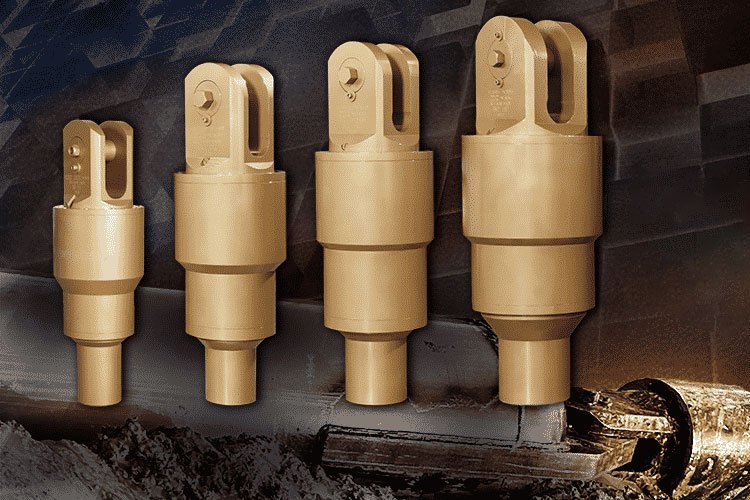
A swivel is a mechanical device installed between the leading end of the product pipe and the drill string or reamer. Its primary and singularly vital purpose is to allow rotation in one part of the system while preventing it in another.
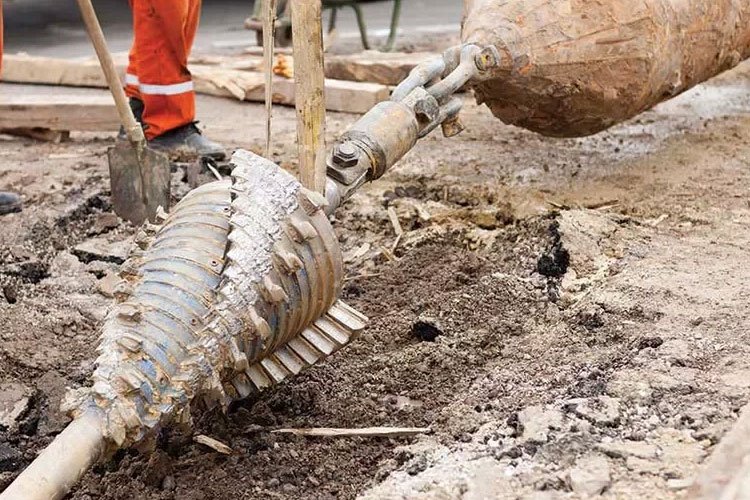
Think of it as a sophisticated bearing connection. It enables the reamer and drill string to rotate freely, transmitting the rig’s torque for effective cutting and hole stabilization, while the product pipe behind it remains torsion-free, experiencing only the necessary axial pull force.
Why You Simply Can’t Do HDD Without a Swivel
Attempting a pullback without a swivel would directly transfer the rotational torque of the drill string into the product pipe. The consequences would be severe:
- Pipe Damage: Immediate twisting could kink, warp, or fracture the pipe, especially PE (polyethylene) pipes or brittle materials.
- Joint Failure: Welded or fused joints on steel or plastic pipes could fail under torsional stress.
- Installation Failure: The entire pullback could stall or result in a catastrophic, expensive failure underground.
- Safety Hazard: A sudden pipe failure under tension and torsion creates a significant safety risk for the crew.
More Than Just Rotation: The Swivel’s Multi-Faceted Role
Modern HDD swivels are engineered for more than just decoupling rotation:
- Handling Immense Loads: They are built to withstand tremendous axial pull loads (often hundreds of tons) and the abrasive, muddy downhole environment.
- Fluid Transfer: Many swivels are designed as “hot swivels,” allowing drilling fluid (mud) to be pumped directly through them and out the reamer. This is crucial for lubricating the pull, carrying cuttings, and stabilizing the borehole throughout the installation process.
- Reliability: A swivel failure during a pullback is a project manager’s nightmare. High-quality swivels are built with robust bearings and seals, ensuring reliability during the critical, non-stop pullback phase.
Conclusion: The Silent Guardian of the Pullback
In the world of HDD, the swivel is far from a mere accessory; it is a fundamental enabling component. It solves the basic physics dilemma of combining rotation with linear pull. By managing torsional stress, it protects the integrity of the asset being installed and ensures the success and safety of the entire operation.
Next time you see an HDD rig working seamlessly in a congested urban area or under a sensitive environmental zone, remember the critical role of the unassuming swivel—the device that makes the modern magic of trenchless technology possible.
SHARE:
More Posts for You
- Choosing the right drill pipe supplier for your Vermeer D16x20
- HDD Drill Rod Bend Radius Calculator: How to Calculate Safety Limits
- Traceability of HDD Drill Rods: The Case for Heat Lots and Serial Numbers
- API 5DP vs API 7-1: Which Standard Actually Controls Drill Rods for HDD?
- Welding or Repairing a Cracked HDD Drill Rod? The Hard No and Safer Alternatives
- Why Mixing Different HDD Drill Rod Brands on the Same String is a Bad Idea
- HDD Drill Rods for Hard Rock vs Soft Ground One Size Does NOT Fit All
- Best Drill Rods for Large-Diameter Pipe Installation (24″ to 60″ Reaming Passes)