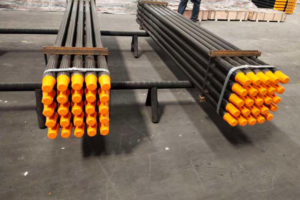
The Moment I Realized Most People Buy HDD Drill Pipes All Wrong
You know that feeling when you’ve been doing something for years, thinking you’ve got it figured out, and then suddenly—BAM—you realize you’ve been missing the obvious?
I had one of those moments about three years into selling drill pipes. And honestly? I still cringe thinking about it.
I was at a job site in Oklahoma. Hot as heck, humid, mosquitos the size of small birds. A customer I’d been selling to for about 18 months was running a 24-inch bore under a highway. Big job, good money, the whole crew was hyped.
Then I heard it.
That sound.
You know the one I’m talking about. The crack-thump of a pipe twisting off 200 feet into the bore path.
The look on that driller’s face? Man, I still see it sometimes. Hours of fishing, replacement pipe costs, the crew standing around getting paid to watch. The customer wasn’t mad at me—yet. But he looked at me and said something that stuck: “I thought we talked about this pipe being good for this job.”
And here’s the thing—we HAD talked about it. I’d asked about the machine, the bore length, the ground conditions. But somewhere in that conversation, I’d missed the real story. And worse? So had he.
What nobody told me about picking drill pipe
Here’s the thing I learned that day, parked in my truck eating a sad sandwich while that crew fished for their string:
Most people pick drill pipe like they’re ordering fast food.
They know they’re hungry. They know they want something. They look at the menu (catalog), pick something that sounds familiar, and hope it works out.
But drill pipe isn’t a cheeseburger. You can’t just swap it out if you ordered wrong.
The real moment of clarity hit me when I started asking different questions. Not “what machine do you have?” but “what’s the absolute worst day you’ve had on a job in the last year?”
That’s when things got interesting.
The stuff they don’t put in the spec sheets
So here’s what I wish someone had told me five years ago, before I learned it the hard way:
Your machine’s rated thrust number? Take it with a grain of salt.
I know, I know—the salesman who sold you the rig swore up and down that it could pull 100,000 pounds. And maybe it can. For about three seconds. But your drill pipe lives in that bore path for hours, days sometimes. It’s not a sprint—it’s a slow, grinding marathon with rocks and mud and surprise boulders that weren’t on the soil report.
I had a customer once—great guy, been drilling since before I was born—who told me he breaks pipe every few months. Assumed it was normal. “Part of the business,” he said.
I asked him what he was running. He showed me. Nice pipe, good brand. But it was the wrong wall thickness for the rock he was punching through. He’d been buying what his dad bought, and his dad drilled in mostly dirt.
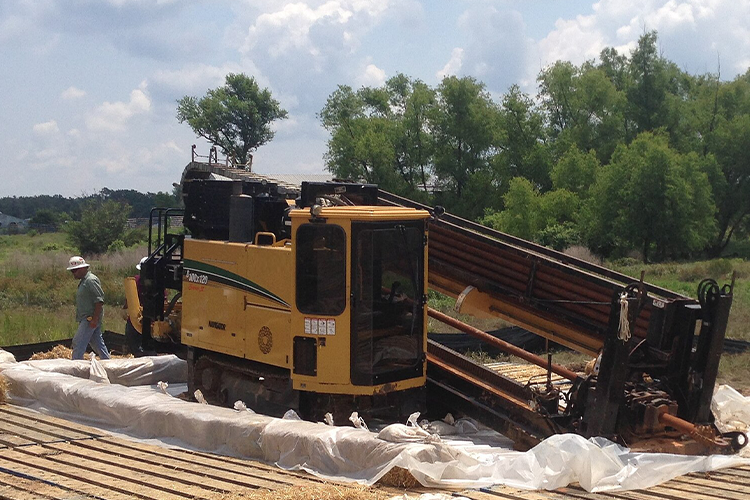
We swapped him to something with a little more steel where it mattered. That was three years ago. He hasn’t broken a joint since.
The thing that actually matters
Look, I could rattle off specifications until your eyes glaze over. Tensile strength, torsional yield, tool joint hardness—these all matter, sure.
But here’s what I actually pay attention to now:
The connection.
I don’t care how pretty the pipe looks or how shiny the coating is. If the connection isn’t right, you’re going to be fishing. Period.
The best “aha” moment I ever had was watching a driller make up a joint and just feeling how smooth it was. No jerking. No cross-threading panic. Just click-click and done.
That’s the stuff that saves your back and your wallet.
Also? Check the ends where the steel gets thicker. That’s where pipe hides its secrets. A good pipe has a smooth transition. A cheap pipe has a hard step that stress loves to hang out on. And stress is lazy—it always picks the easy spot to break things.
What I’d tell my younger self
If I could go back to that Oklahoma job site, knowing what I know now, here’s what I’d whisper to myself while that crew was fishing:
Stop asking what machine they have. Ask what breaks.
Stop looking at the price per foot. Look at what the last 50 feet cost them in downtime.
And for crying out loud—go look at their used pipe pile. The broken ones tell the real story.
The pipe that twisted off that day? It wasn’t bad pipe. It was the wrong pipe for that job. Wrong wall, wrong connection, wrong expectations.
The customer and I both learned something. He started asking better questions. I started giving better answers.
Your turn
So yeah, that’s my story. The day I realized I’d been looking at drill pipe all wrong—and helping my customers do the same.
Next time you’re staring at a rack of pipe wondering which one to put in the ground, ask yourself: What’s the worst that can happen if I get this wrong?
Then pick the pipe that makes that answer boring.
SHARE:
More Posts for You
- Choosing the right drill pipe supplier for your Vermeer D16x20
- HDD Drill Rod Bend Radius Calculator: How to Calculate Safety Limits
- Traceability of HDD Drill Rods: The Case for Heat Lots and Serial Numbers
- API 5DP vs API 7-1: Which Standard Actually Controls Drill Rods for HDD?
- Welding or Repairing a Cracked HDD Drill Rod? The Hard No and Safer Alternatives
- Why Mixing Different HDD Drill Rod Brands on the Same String is a Bad Idea
- HDD Drill Rods for Hard Rock vs Soft Ground One Size Does NOT Fit All
- Best Drill Rods for Large-Diameter Pipe Installation (24″ to 60″ Reaming Passes)