
A quote for “rods and a 12-inch reamer” can come back with two attractive prices and two quite different tool strings. One supplier has priced a bare cutter. The other has included a connection sub and a swivel. Both have answered the request. Neither price tells the buyer whether the equipment will fit the rods already on the truck.
For a horizontal directional drilling job, put three things on the first page of the request for quotation (RFQ): the rod system actually fitted to the rig, the ground the tooling will encounter, and the outside dimensions of the product assembly being installed. Then ask each supplier to mark up the same list of connections. Here is how to put that package together.
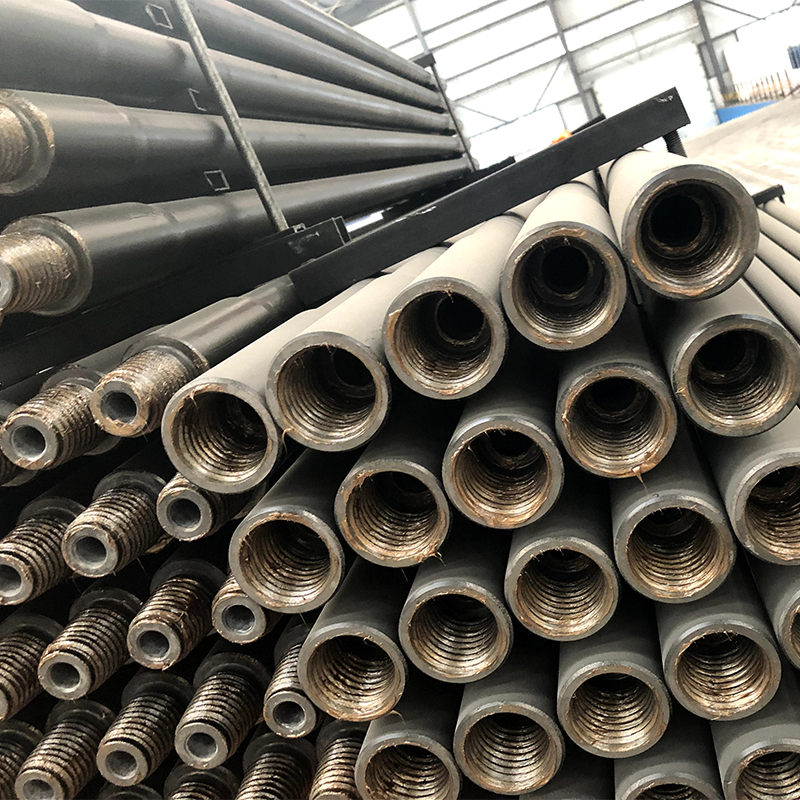
Start at the rig and identify the rods on hand
Write down the drill make, model and series. Add the part number from a known rod or an earlier purchase order that you can trace to the rack in use. A rig model is a useful starting point. A second-hand machine may have arrived with a different rod system, and a contractor with several rigs may stock more than one connection in the yard.
Include the rod length and say how you measured it. Overall length from end to end and length between shoulders describe different dimensions. Record body outside diameter separately from the larger diameter at the joint. A photograph with a ruler is useful for orientation, but two threads that look alike in a phone picture can have different profiles. Ask for a manufacturer part-number cross-reference or a dimensioned connection drawing before accepting a substitute.
If the order is a top-up, say whether the new rods must run with an existing string. If it is a complete replacement, say which drive-side components you intend to keep. Those two purchases can have the same rod count and very different compatibility requirements. The ZHE HDD drill rod range is a starting point for identifying the family to put on the inquiry.
Describe the ground changes along the bore
“Mostly clay” is a poor description if the reamer must also pass through a gravel lens near the exit. Send the relevant ground log, identify where the change occurs along the route, and distinguish observed conditions from assumptions. Notes from a nearby installation can help a supplier ask better questions. Label them as observations from the adjacent job.
In sticky, reactive clay, ask how the proposed tool mixes cuttings with fluid and what features help limit material building up on the tool. In loose ground, ask what the body geometry is intended to do for the hole wall. Where rock is expected, ask which cutting structure the supplier proposes and what formation information they need to confirm it. Vermeer’s reamer application guide separates clay and loam, cobble and broken formation, and rock. Its recommendations apply to the tools listed there. For a proposed alternative, request its own application data.
Compare the same scope on every quotation
Use one row per decision. A blank cell is worth a follow-up call before the order goes out.
| RFQ item | What the buyer supplies | What the supplier confirms |
|---|---|---|
| Rod string | Rig series, current rod part number, measured length convention | Rod part number, connection designation and compatibility basis |
| Drive end | Current chuck and sub identification | Existing parts retained and any required replacement |
| Backreamer | Ground profile, product assembly dimensions and proposed bore plan | Tool style, actual cutting diameter and front and rear connections |
| Pullback assembly | Pulling head details and project load requirements | Swivel model, rated capacity, end fittings and supporting documents |
| Delivery | Required date and delivery location | Stock status by line, freight, and lead time for any missing adapter |
Draw the connections before approving the order
For a typical pullback assembly, sketch the sequence on one line. A simple quotation sketch might read drill rod → connection sub if required → backreamer → swivel → pulling head → product pipe. The arrows show adjoining components. The approved bore plan and the tooling manufacturer determine the actual assembly for the job.
Give each join a letter. At join A, write the rod connection on one side and the mating tool connection on the other. Work along the sketch, noting thread designation and pin or box wherever the connection is threaded. For a clevis or another mechanical fitting, request the matching dimensions and retaining hardware. Have the supplier return the sketch marked with the part number on each side of every join.
The drive end deserves its own small sketch. An adapter in the exit-pit assembly cannot resolve a mismatch at the drive chuck. If the supplier lists a sub saver, ask which interface it protects and which two connections it carries. This is often the quickest way to discover that two quotations use the same part description for different pieces.
Read a sample quote the way a receiving crew would
Suppose a contractor is replacing part of a rod rack and ordering a backreamer for a conduit crossing. Quote A lists the rod family and a nominal reamer diameter. Quote B includes a drawing, names both ends of the reamer and flags the swivel as buyer-supplied. The buyer owns a swivel, so it is tempting to mark that line complete.
There are still two open questions. Does the swivel have the fitting shown on the drawing? Is its documented capacity suitable for the planned assembly? Send its identification to the supplier and have the project team check the rating against the job requirements. If a separate fitting is needed, add it to both comparison sheets. Only then does the delivered price represent the same collection of usable parts.
Apply the same discipline to “available now.” Rods in stock and an adapter due later produce two delivery dates. Ask for the dispatch date of the last essential component, then compare that date with the planned mobilization. On a tight utility crossing, that answer may matter more than the difference in rod price.
What to send with the purchase inquiry
Attach a legible rod marking, a photo of each connection, the rig identification, the relevant ground notes and the pulling assembly dimensions. Include the largest outside dimension that must pass through the bore, including a joint or fitting if it is larger than the pipe body. Ask the tooling supplier and project team to confirm the required clearance and pass plan for the specific crossing. A product pipe diameter by itself cannot settle either question.
Finish with one practical request: “Please identify every item our crew must supply to connect the package shown.” Keep the marked drawing with the final purchase order. When the shipment reaches the yard, the receiving crew can check the delivered part numbers, protectors, fittings and documents against the same sketch that purchasing approved.