The Joint is the Thing: A Short HDD Confession About Rods and Tools
I’m going to be honest with you. I thought I knew what drill rods were for the first year I worked at the factory. I could list off all kinds of specs, like steel grades, torque ratings, and tensile strength. I sounded smart. But what about looking back? I didn’t really understand it.
About three years ago, I had one of those “lightbulb” moments at work. I was visiting a customer who had been drilling for decades and was a good guy. He was swearing at a brand-new set of rods. He called them “junk.” “Won’t stay tight.” Making my life a living hell.
I stood there and watched him roll the next joint. He wiped the box and pin with his glove, stabbed it with one quick swipe, and sent it home. And when that thing kept getting looser down the bore, he looked at me like I was to blame.
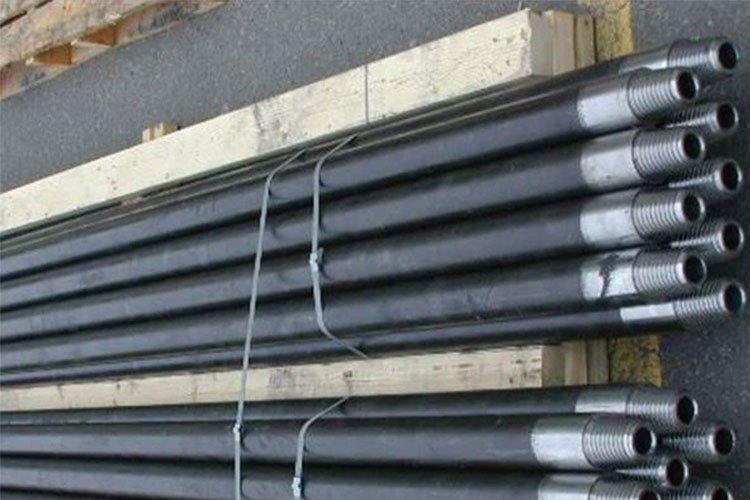
That’s when it made sense. Not the steel. It wasn’t the heat treatment. It was the link.
So let’s just sit down and talk about HDD rod and tooling connections, which no one ever tells you about. I’ve learned this the hard way by watching guys who are a lot smarter than me.
It’s not “Lube It or Lose It”—It’s Clean It
Do you know the small tube of thread compound in your truck? The one that has been rolling around since the last job, is missing a cap, and is full of sand? You might as well be using sandpaper if you are using that.
Here’s what I think: lube isn’t just for making it easier to get out later. It’s all about controlling friction. When you stab a dry or dirty connection, the threads don’t fit together the way they were meant to. You will get something called “false torque.” Your wrench says you’re at 8,000 foot-pounds, but is that true? The shoulders aren’t even touching each other. It’s just the threads that are fighting dirt.
One of my customers said he was losing rods because of “bad steel.” I drove out, pulled a joint apart, and a small pile of dried mud fell out of the box. I just stared at him. He laughed. He doesn’t do that anymore.
Make it clean. Every time. And what if the thread compound looks like it has been in a fight? Get a new tube. It’s an affordable way to protect yourself.
Shoulder to Shoulder
This is the secret that took me way too long to figure out: The threads don’t hold the weight. The shoulders do.
The threads are just there to hold the shoulders together. The joint becomes solid when the shoulders, which are the flat faces on the box and the pin, fit together perfectly. That’s where the stiffness comes from. That’s how you get a nice, straight bore path without the rod acting like a wet noodle.
If you’re making a joint and you see that the box face and the pin face aren’t fully seated? If there is a space? Stop. There’s something wrong. You either have dirt in there or your shoulder is hurt from over-torquing in the past. And if you keep running it with that gap, you’re not drilling with a rod anymore. You’re using a jackhammer to drill. That space lets the connection move around a little, and a move quickly turns into a crack.
The “Click” Is True
A friend of mine drills in rocky ground out west. He can tell what’s going on downhole just by putting his hand on the drill frame. I once asked him how he knows when the connection is right.
He said, “I listen for the click.”
Not the groaning of the hydraulics. Not the wrench hitting the preset. The click. That’s the sound of the shoulders finally coming together. If you listen closely, you can hear it. That’s the sound of the rod saying, “Okay, I get it.” Let’s get to work.
If you don’t hear that noise? If it just kind of fits in? There is something wrong with you. It’s possible that the lube is making it too slippery (yes, that’s a thing—too much lube can hydro-lock in the thread root and give you a false reading too), or that the thread is broken. But that sound confirmation? That gives you peace of mind.
Tooling Connections: The Lost Child
We take care of the drill rods so well, but then we screw on a $2,000 sonde housing or a backreamer and act like it’s not important.
I’ve seen guys use the same old subs for years. They’ll use high-quality, heat-treated rods and then hang a starter rod with a sub that has been beaten to death off the end. And they want to know why the first three rods in the string keep breaking.
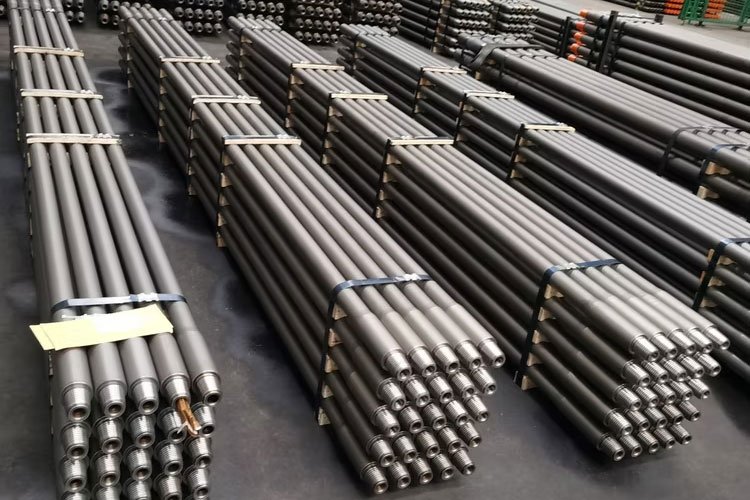
The chaos begins at your tooling connection. All the vibration from the reamer and all the whipping from the swivel go into that one connection. If that sub or adapter is loose, it’s going to ruin the threads on your first rod and make them look like melted butter.
This is my rule: If your tooling connection shakes more than 1/16 of an inch, Put it away. Put it on the shop’s “shame wall.” Don’t let it eat your good rods.
Last Rant
Hey, I sell this stuff for a living. I want you to get rods. But I want you to come back and buy more rods because you wore them out, not because you broke them.
Some of my customers can get 30,000 feet out of a set of rods. And I have customers who can get 3,000 feet out of the same steel. It’s not the ground conditions that make the difference. They take five seconds to wipe the threads, half a second to listen for the click, and a little bit of pride in putting that joint together.
So, the next time you’re working and you’re tired and the locator is yelling at you and you just want to get one more rod in the ground before lunch? Breathe. Take care of that thread. Put some oil on it. Stab it. Feel it sit.
Your back and your wallet will be happy later.
Do you have any scary stories about connections that went wrong? Or am I the only one who has to learn this the hard way? Leave a comment; I’d love to hear what you have to say.
SHARE:
More Posts for You
- The Joint is the Thing: A Short HDD Confession About Rods and Tools
- Why Your HDD Rod Threads Keep Rusting (And What I Learned from an Angry Old Man)
- The Day I Had a Warehouse Epiphany About HDD Drill Rods
- Where to do Horizontal Directional Drilling (HDD) Shines Actually
- The Moment I Realized Most People Buy HDD Drill Pipes All Wrong
- So You’re Buying HDD Drill Pipe? Let’s Talk About the Stuff That Actually Matters
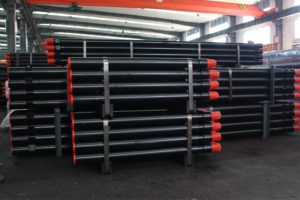
- Maximize Your Ditch Witch Performance with ZHE HDD Drill Pipes
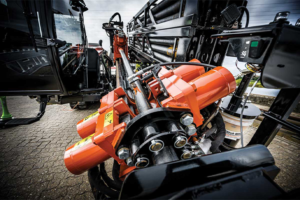
- How ZHE HDD Drill Pipes Make Your Ditch Witch JT100 Work Better and Better