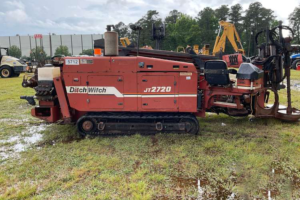
The Secret Handshake of Drill Pipes: A Look Inside Friction Welding
You’re curious about how our drill pipes are made?
I don’t blame you — I was the same when I first joined this industry years ago. Everyone talks about steel grades, torque, and length, but hardly anyone mentions the magic that holds it all together: friction welding.
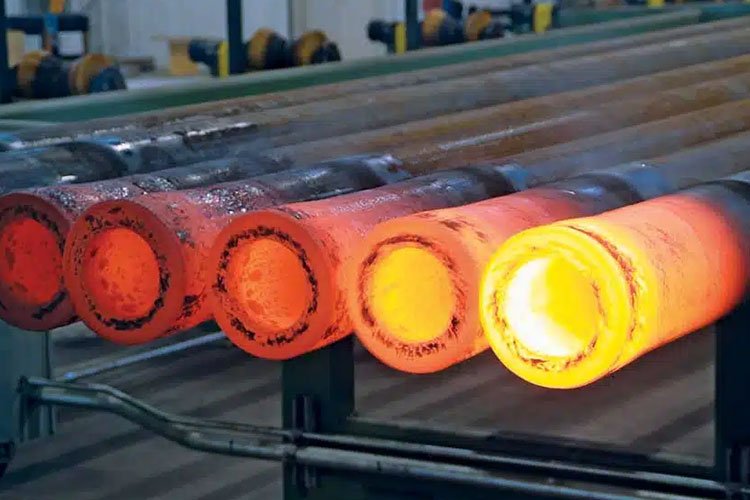
My “Wait, That’s Not Just Welding?” Moment
Let me be real with you — before I started working here, I thought welding was just… welding. You heat two pieces of metal and stick them together, right? Then one afternoon, I stood in front of our friction welding machine and had my “aha” moment. This wasn’t just joining metal — it was like a carefully choreographed dance under extreme heat and pressure.
The High-Speed, High-Temperature “Blind Date”
Here’s how it goes down in our workshop.
We start with the pipe body and the tool joint — two separate pieces that need to become one. They’re loaded into the machine, one rotating like crazy, the other held still. When they meet, the friction creates heat — I mean, serious heat — enough to make the ends soften without melting completely. That’s the sweet spot. It’s not just about sticking them together; it’s about making the grain structure flow into each other so that once cooled, you can hardly tell where one ends and the other begins.
I remember joking with our production manager, “So it’s like a high-speed, high-temperature blind date?” He laughed and said, “Yeah, except here, we make sure they never want to leave each other.”
Letting the Metal “Take a Deep Breath”
After welding, the pipe isn’t ready yet — it’s got this extra material around the weld zone, called flash. We clean it up. Not just for looks, but because a smooth surface matters when you’re underground, avoiding stress points that could invite cracks or wear.
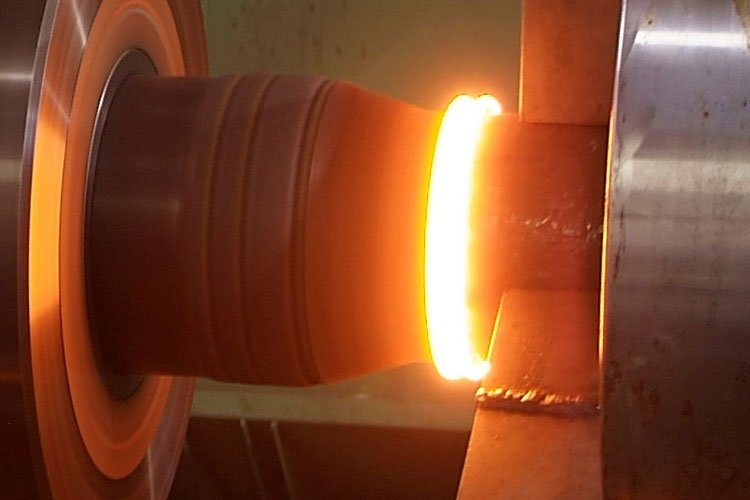
Then comes my favorite quiet moment in the process: heat treatment. The welded area goes through controlled heating and cooling to relieve stress and restore toughness. It’s like letting the metal take a deep breath and relax after all that intensity. If you skip this? Well, let’s just say I’ve seen pipes that didn’t go through proper heat treatment fail earlier in the field. Not pretty.
The Satisfying Part: Seeing “Clean Lines”
Every single pipe gets checked. And I mean checked — ultrasonic testing, hardness tests, visual inspections. I sometimes hang around the QA team just to watch the screens. Seeing those clean, consistent lines on the ultrasonic reader is weirdly satisfying. It means the bond is solid, invisible to the eye but perfect inside.
Oh, and here’s a little insider moment: once, a client visited and asked if the weld was the weakest point. I took him to the testing area, and we watched a pipe being pushed to its limits. The break didn’t happen at the weld. His expression? Priceless.
More Than Just a Step — It’s Where Trust is Built
So yeah, that’s the journey — from two separate pieces to what I like to call a “trustworthy tube.” It’s not just a step in manufacturing; it’s where the pipe earns its reliability. Next time you’re on a job site, maybe you’ll look at your drill string a little differently.
Got any drill pipe stories of your own? I’d love to hear ’em. Shoot me a message — no sales talk, just shop talk.
SHARE:
More Posts for You
- Why Your HDD Rod Threads Keep Rusting (And What I Learned from an Angry Old Man)
- The Day I Had a Warehouse Epiphany About HDD Drill Rods
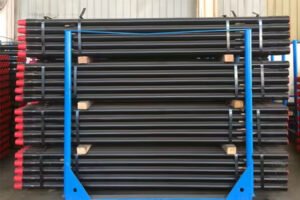
- Where to do Horizontal Directional Drilling (HDD) Shines Actually
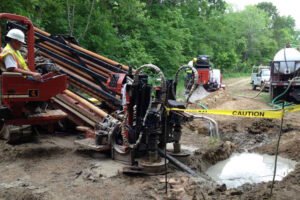
- The Moment I Realized Most People Buy HDD Drill Pipes All Wrong
- So You’re Buying HDD Drill Pipe? Let’s Talk About the Stuff That Actually Matters
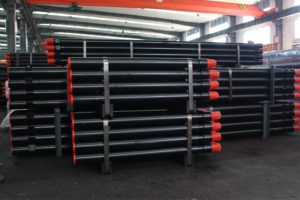
- Maximize Your Ditch Witch Performance with ZHE HDD Drill Pipes
- How ZHE HDD Drill Pipes Make Your Ditch Witch JT100 Work Better and Better
- ZHE HDD Drill Pipes Will Help Your JT2720 Work Better