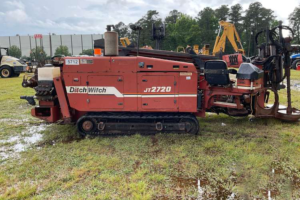
What Is the Role of Mud Pump in Horizontal Directional Drilling Field?
The mud pump is one of the most important pieces of equipment for Horizontal Directional Drilling construction, which includes methods like horizontal directional drilling pipe jacking and micro tunnel construction. Its main job is to “ensure the safety, efficiency, and accuracy of underground tunnel or pipe construction.”

It can be broken down into five main functions, each of which is closely related to the main goal of Horizontal Directional Drilling, which is to “not excavate the surface and protect the surrounding environment.”
The first main job is to remove slag and clean the holes so they don’t get blocked.
Before horizontal directional drilling can begin, pilot holes or holes that are already there must be drilled or expanded underground. This will create a lot of impurities, like rock debris, slag, sand particles, and so on. If dirt builds up in the hole, it can cause the drill rod to get stuck, the drill bit to wear down faster, and even the borehole to collapse.
The mud pump moves the prepared “mud” (water, bentonite, and other things) to the bottom of the borehole by using high pressure. The mud will wrap around the rock debris to make a “mud residue mixture.” Then, the mud pump will use its circulating power to send the mixture out of the hole in the opposite direction of the mud treatment system on the ground (like a sedimentation tank or separator). This will allow for “drilling while cleaning” and make sure the borehole is smooth.
Core Function 2: Protecting the wall from falling down to keep the hole from collapsing
Boreholes that are built without digging are often found in underground soil (like soft soil or sand layers) or rock formations. If the wall of the borehole doesn’t have support, it could fall down because of the weight of the soil and the pressure of the groundwater (especially for large-diameter or horizontal boreholes). If it collapses, it could break the drill pipe, settle the ground, or even damage underground pipes like water pipes and cables.
The mud pump will move mud that will make a thick “mud film” on the hole wall (usually 1–5mm thick). This film will stop water from eroding the hole wall. It also uses the mud’s “static hydraulic pressure” to balance the soil and water pressure outside the hole. This is like building a “temporary support layer” for the hole wall, which keeps the structure of the hole wall stable and prevents it from falling down.
Core Function Three: Protecting construction equipment by cooling and lubricating it
When Horizontal Directional Drilling drilling equipment (like drill bits and drill rods) works underground at high speeds (up to hundreds of revolutions per minute), the friction between the drill bit and rock/soil creates a lot of heat. The friction between the drill rod and the hole wall can also cause mechanical wear. If the temperature gets too high, the alloy cutting edge of the drill bit may soften and the drill rod may bend. If the wear is bad enough, it will shorten the equipment’s life and even cause it to break down.
The mud pump moves mud directly to the drill bit and drill rod. The mud flow takes away the heat caused by friction, keeping the equipment temperature within a safe range (usually ≤ 60 °C). The bentonite in the mud also acts as a lubricant, forming a “lubricating film” between the drill rod and the hole wall and between the drill bit and the rock debris. This reduces mechanical friction and wear on the equipment.
Core Function Four: Helping with construction, making it more accurate
No-dig drilling construction, like horizontal directional drilling that goes under highways and rivers, needs very high “drilling trajectory accuracy” (deviation must be kept to within a few centimetres). It also needs real-time monitoring of the drilling direction and adjustment of the drill bit angle using “measurement while drilling (MWD) equipment.”
MWD equipment is usually put in the drill rod behind the drill bit. The signals it sends out, like electromagnetic and acoustic signals, have to go through “mud” to get to the ground receiving system. The mud pump makes a continuous “fluid channel” in the hole, so the signals can move quickly through the mud. Signal loss and more measurement errors will happen if the mud supply stops or the pressure changes. So, the mud pump needs to work well all the time in order to make sure that guiding signals are sent smoothly and trajectory accuracy is improved.
Function extension: Change mud parameters and adapt to different processes
Mud must have different properties for different types of horizontal directional drilling, such as viscosity, specific gravity, and water loss. By changing the “displacement” (the amount of mud delivered per unit of time, usually 50–500 m³/h) and “pressure” (usually 1–20MPa), mud pumps can accurately control the flow rate, pressure, and coverage range of mud in the hole.

-Soft soil formation: To keep the hole wall from being scoured, the speed of the mud flow must be slowed down;
-Sand layer: The viscosity of the mud needs to be increased, and the ability of the slag to carry weight needs to be improved.
-Top pipe construction: To make it easier to jack up the pipe section, you need to use a mud pump to inject “lubricating mud” into the outer wall of the pipe section. This will lower the frictional resistance between the pipe section and the soil.
Summary: Why Mud Pumps Are Necessary for No Dig Drilling
The main problem with building Horizontal Directional Drilling is that underground work is hard to see and understand. Mud pumps directly solve big problems like tunnel blockage, collapse, equipment damage, and not being accurate enough by doing four main things: “slag discharge, wall protection, cooling, and guidance.” They are the main link between “ground equipment” and “underground construction.” Their performance, like how stable the pressure is and how far the displacement adjustment range goes, directly affects the safety, efficiency, and quality of Horizontal Directional Drilling engineering.
- The first main job is to remove slag and clean the holes so they don't get blocked.
- Core Function 2: Protecting the wall from falling down to keep the hole from collapsing
- Core Function Three: Protecting construction equipment by cooling and lubricating it
- Core Function Four: Helping with construction, making it more accurate
- Function extension: Change mud parameters and adapt to different processes
- Summary: Why Mud Pumps Are Necessary for No Dig Drilling
SHARE:
More Posts for You
- Why Your HDD Rod Threads Keep Rusting (And What I Learned from an Angry Old Man)
- The Day I Had a Warehouse Epiphany About HDD Drill Rods
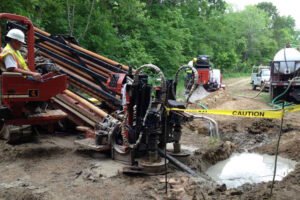
- Where to do Horizontal Directional Drilling (HDD) Shines Actually
- The Moment I Realized Most People Buy HDD Drill Pipes All Wrong
- So You’re Buying HDD Drill Pipe? Let’s Talk About the Stuff That Actually Matters
- Maximize Your Ditch Witch Performance with ZHE HDD Drill Pipes
- How ZHE HDD Drill Pipes Make Your Ditch Witch JT100 Work Better and Better
- ZHE HDD Drill Pipes Will Help Your JT2720 Work Better