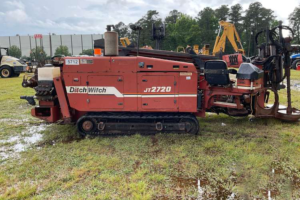
Where is Horizontal Directional Drilling (HDD) Most Commonly Used?
In the world of modern construction and infrastructure development, efficiency and minimal disruption are key. This is where trenchless technology, specifically Horizontal Directional Drilling (HDD), shines. Unlike traditional open-cut methods that involve digging massive trenches, HDD allows us to install underground utilities with remarkable precision and significantly less surface disturbance.
But where exactly is this innovative technique most applicable? Let’s explore the primary scenarios where HDD is the preferred choice.
Crossing Major Obstacles: Rivers, Highways, and Railways
This is arguably the classic and most compelling use case for HDD. When a pipeline or utility conduit needs to pass under a significant, sensitive, or difficult-to-disrupt obstacle, HDD is often the only viable solution.
- Rivers and Water Bodies: Open-cut methods across rivers are ecologically damaging, logistically complex, and often prohibited. HDD allows for a deep, stable installation well beneath the riverbed, protecting the aquatic ecosystem and ensuring the pipeline’s integrity without affecting water traffic or flow.
- Highways and Expressways: Digging up a busy road causes massive traffic jams, economic losses, and safety hazards. HDD enables installation without a single lane closure, boring deep underneath the asphalt to keep traffic flowing seamlessly.
- Railway Lines: Similar to highways, disrupting rail traffic is highly costly and unsafe. HDD provides a safe, efficient way to install utilities without affecting the train schedule or the structural stability of the tracks.
Congested Urban and Suburban Environments
In cities and developed suburbs, the ground is already a complex maze of existing utilities—water mains, gas lines, fiber optics, and sewer systems. The space for new construction is limited.
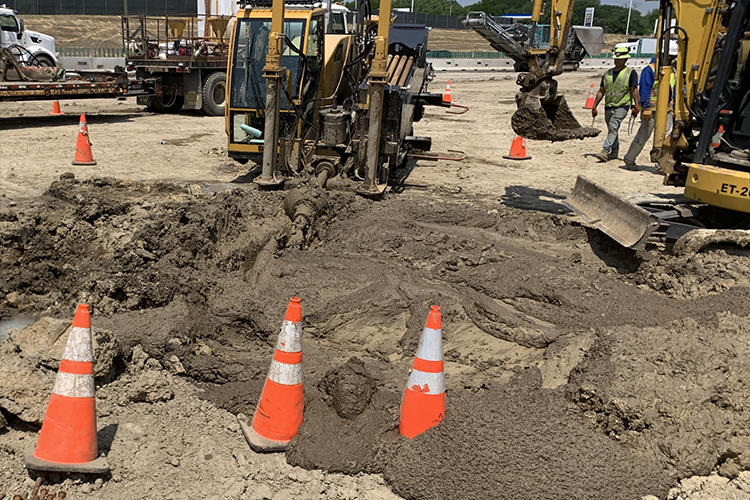
- Minimizing Surface Disruption: HDD drastically reduces the need for tearing up streets, sidewalks, parks, and landscaping. This preserves public infrastructure, reduces restoration costs, and minimizes noise, dust, and inconvenience for residents and businesses.
- Navigating Complex Utility Networks: With advanced tracking and guidance systems, HDD crews can accurately steer the drill head to navigate through the “congestion” of existing utilities, reducing the risk of costly and dangerous strikes.
Environmentally Sensitive Areas
Preserving natural habitats, protected wetlands, and parklands is a top priority for many projects.
- Protected Lands and Conservation Areas: HDD’s minimal surface footprint makes it ideal for crossing under these zones. It avoids the destruction of flora and fauna, prevents soil erosion, and maintains the area’s natural aesthetic and ecological function.
Deep Installations and Challenging Geology
Sometimes, the project requirements or the ground conditions themselves dictate the use of HDD.
- Deep Utility Placements: When utilities need to be laid at a significant depth due to geological factors or future development plans, HDD is more efficient than excavating an extremely deep and wide trench.
- Stable Soil Conditions: While HDD can be adapted to various ground types, it is particularly well-suited for stable soils like clay, silt, and certain rock formations where the borehole can maintain its integrity.
Common Applications: What is Being Installed?
The utilities installed via HDD are diverse and critical to our daily lives:

- Oil and Natural Gas Pipelines: For long-distance transmission lines crossing various terrains.
- Fiber Optic and Telecommunication Conduits: The backbone of our internet and communication networks, often needing rapid deployment in urban and rural areas.
- Water and Sewer Mains: For expanding or rehabilitating municipal water systems with minimal public disruption.
- Power and Electrical Cables: Subsurface electrical transmission, especially for connecting renewable energy sources.
In a Nutshell
Horizontal Directional Drilling is not just a construction method; it’s a smarter, more sustainable approach to building the infrastructure of the future. Its value is most apparent in scenarios where minimizing surface impact, protecting the environment, and maintaining existing social and economic activities are paramount.
SHARE:
More Posts for You
- Why Your HDD Rod Threads Keep Rusting (And What I Learned from an Angry Old Man)
- The Day I Had a Warehouse Epiphany About HDD Drill Rods
- Where to do Horizontal Directional Drilling (HDD) Shines Actually
- The Moment I Realized Most People Buy HDD Drill Pipes All Wrong
- So You’re Buying HDD Drill Pipe? Let’s Talk About the Stuff That Actually Matters
- Maximize Your Ditch Witch Performance with ZHE HDD Drill Pipes
- How ZHE HDD Drill Pipes Make Your Ditch Witch JT100 Work Better and Better
- ZHE HDD Drill Pipes Will Help Your JT2720 Work Better