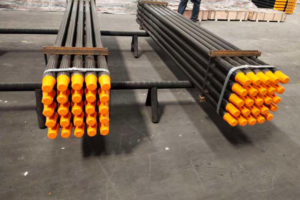
HDD Drill Rods – Should You Buy Them Only by Rig Model? (I’m gonna tell you a little secret)
Hi there, my drilling friend.
Take a seat. Or just hang on your truck’s tailgate. I have something to get off my chest.
You know that feeling when you’ve been doing something for years and then one day you realise: wait, why have I been thinking about it like this? I had that happen to me a while back. And it was about something super simple: picking HDD drill rods.
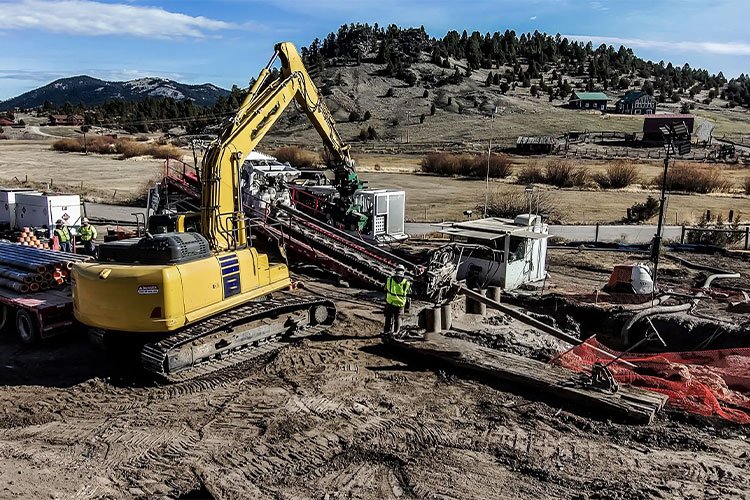
For a long time I thought like most people do. I am running a 33K rig, so I need 33K rods. Easy, right? Clean. Makes you feel secure.
Yeah… not so quick.
Let me tell you what I found out the hard way. And believe me, I’ve broken a few rods. Some on the ground, some just in my pride.
The Day a Customer Made Me Say “Huh?”
So this guy calls me, call him Mike. Mike’s been at it for maybe six or seven years. Not a newbie. He just bought a shiny 40k rig used. Tingly as a kid with a new dirt bike.
“Hey, just send me four boxes of your 3.5” rods,” he says. “The usual ones for a 40K rig.
I asked him, “What’s your usual ground, Mike?”
Silence.
“Mike? Sand? Clay? “Little bit of rock?”
He says, “Uh… just send me the rods. 40K rods, man. “Fits the rig, eh?”
And that was my little oh-no moment. No, it doesn’t work that way. But I used to think exactly the same.
When a Rod Broke 150 Feet Below
Let me back up a bit. Early in my career – I think I was in my second year selling drill rods – I had a customer who insisted on using “the right rods for his rig.” He had a 25 K rig. Ordered rods, 2-3/8”, run of the mill stuff.
The ground was mostly clay with a few pockets of sand. Nothing big, right?
Nope.
He was pulling back a 16” reamer (don’t ask me why – sometimes people just get nuts with reamer sizes). Halfway down the bore, crack. Rod turned right immediately at the box junction. 150 ft down. Friday afternoon.
He called me. Not mad. Just tired. I thought these were the rods I needed for my rig.
That’s when it dawned on me. The size of the rig only tells you what the machine can lift and spin. It says very little about what the rods will survive on.
So What Really Matters? (Clue: It’s Not Just the Rig Model)
Okay, I’ll spare you the headache. “This is what I ask myself – and my customers – before choosing a rod. And no, I don’t have some fancy formula. It’s just words.
What is your ground really like? Tell the truth.
Sand ? Good for you. Low torque and low stress.
Clays that are sticky? Now we’re talking. Your rod is wrapped in clay like a wet blanket. It creates huge rotational drag.
Cobbles or crushed rock? You’ve got to be tough. But not strength. Hardness. Impact loads will kill a brittle rod faster than a bad welder.
I had a guy in Texas once Drilling through caliche, that white hard layer. He kept snapping 3.5” rods. Switched to smaller diameter but better steel heat treatment. Problem solved. His outfit was the same. The ground was.
How long is your average bore?
Short shot – 300 foot? Most rods will be fine with that as long as you don’t do stupid with pullback.
Long bore – 800, 1000 feet? Now you’re talking fatigue. Every rotation, every bend in the pilot hole wears the steel. A rod that works great at 400 feet might throw in the towel at 900 feet.
I learned this from a veteran of Florida horizontal directional drilling. “Kid, it ain’t the weight,” he said. It’s the mileage. Same rod, same rig, twice the distance – whole different story.
What size back reamer do you actually pull?
Here most people deceive themselves. And I understand it. We all want to run big reamers, because it feels like it’s faster.
But listen, trying to pull a 20” reamer through heavy clay with a 2-3/8” rod? That’s like asking a bicycle to pull a boat. Maybe once, sure. But not two times.
You might have the hydraulic muscle in your rig. Rod? It’s the weak point. And it will snap at the least prepared moment.
A small story about two clients – same rig, different rods
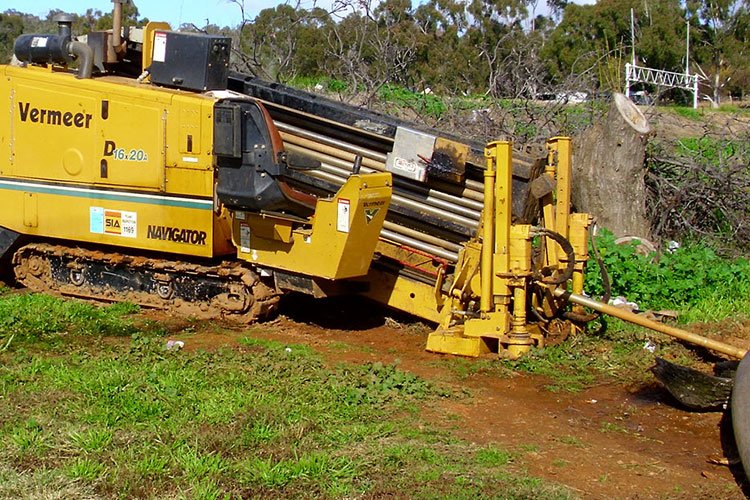
Let me tell you a real case. Two different contractors running 30K Vermeer rigs.
Customer A: Drills sandy loam. Drills 400-500 ft. Pulls max. 12” reamer. He uses our standard 2-3/8” rods.” Never breaks a one. “He calls me once a year and says, ‘Everything is fine. Boring (pun intended), but happy.
Customer B: drilling through rocky glacial till. Bores 700 ft. Sometimes pulls 18” reamer because “the job spec said so” He used to break 2-3/8” rods every two weeks. Changed to our heavy walled 2-7/8” rods with a different thread design. Same 30K rig still running. Now maybe breaks a rod a year.
Same truck. Two completely different rod choices.
You know where I’m headed with this?
“But Wait – The Thread Has to Match, Doesn’t It?”
Okay, Know-It-All. You got me at that.
Yes, the connection thread has to match your drill pipe and your tooling. That’s non-negotiable.” If your rig has a 3.5” API IF box on the swivel you can’t just screw in a 2-3/8” pin. Obvious.
But that’s a mechanical match. That’s not the same as “this rod is made for a 40K rig”
Think shoes. Your foot size (rig connection) must match. But whether you wear hiking boots or running shoes (rod specs) depends on the trail – not just your foot.
And yeah, I’ve seen guys buy expensive “heavy duty” rods for a 20K rig because “bigger is better”. Then they complain about the weight of the rods and the slow drilling. Seriously. You used a sledge hammer to hang a picture.
So Here’s My Actual Advice – From One Driller To Another
Don’t just ring your supplier and say “give me rods for my rig”.
Call them and tell them:
This is my rig. That’s what my land is like—the nasty parts, I mean, not the pretty parts.’ This is how long I usually get bored. And yeah, I do go bigger than I should with the reamer sometimes. “What rod do you really recommend?”
Any supplier worth their salt will ask you those questions in return. If they just say “oh, we have a chart for that” and don’t ask you about your ground… walk away. Or at least don’t trust them completely.
I have been doing this for five years. I always learn something new when a customer tells me about some weird job they pulled off, or some weird way they broke a rod.
One Last Thing – Don’t Overthink It But Don’t Underthink It Either
Look, I’m not saying you have to have a PhD in metallurgy. Most of the time a good standard rod from a good factory will do the job fine.
But when you start breaking rods on a regular basis? When you’re pulling your hair out at 4:30PM on a Friday? That’s when you remember this little blog.
The rig model is your starting point. Not the end.
The real bosses are the ground, the distance, the reamer size, and your own drilling style (be honest—are you a little aggressive with the throttle?).
So next someone tells you “just match the rig” you can smile and nod. And inside you will have a better knowing.
Your Turn Okay
Got a ground condition that’s chewing up your rods? A job site that makes you question your life decisions? Contact me. Really. I like these puzzles.
There is no sales pitch. Just a guy who has seen enough broken pins and cracked boxes to know that there is no one size fits all.
Drill smarter. Less breaks. And call me before you order.
SHARE:
More Posts for You
- Choosing the right drill pipe supplier for your Vermeer D16x20
- HDD Drill Rod Bend Radius Calculator: How to Calculate Safety Limits
- Traceability of HDD Drill Rods: The Case for Heat Lots and Serial Numbers
- API 5DP vs API 7-1: Which Standard Actually Controls Drill Rods for HDD?
- Welding or Repairing a Cracked HDD Drill Rod? The Hard No and Safer Alternatives
- Why Mixing Different HDD Drill Rod Brands on the Same String is a Bad Idea
- HDD Drill Rods for Hard Rock vs Soft Ground One Size Does NOT Fit All
- Best Drill Rods for Large-Diameter Pipe Installation (24″ to 60″ Reaming Passes)