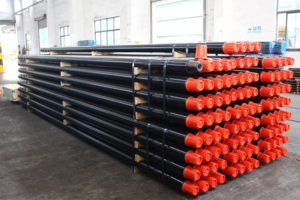
HDD Drill Rod Types & Specifications: The Full Guide
Full disclosure: I’ve been selling HDD drill rods for about five years now, and I still remember my first week on the job. I walked into our factory warehouse, saw all those steel pipes stacked up and thought, “They’re… all just pipes, right? Long and shorter. “What’s the big deal?
Yeah. I was pretty. And dead wrong.
Fast forward through a couple of muddy job sites, a couple of snapped rods (not mine, thank god – but some close calls) and about a thousand conversations with guys who actually run these rigs day in and day out. I’ve learned that choosing the right drill rod is not like choosing a wrench – you don’t just grab the first one that’s in reach. It’s more like choosing the right boots to go hiking. Sure, you can wear sneakers on a rocky trail. But you’ll hate life by mile three.
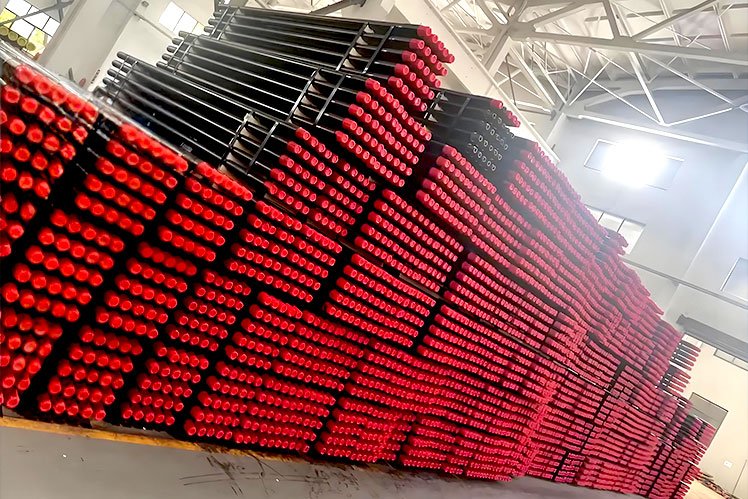
So let’s talk about HDD drill rod types and specs—not like a boring catalogue, but like I’m sitting in your truck, killing time while you wait for the vac truck to show up.
The “Oh Crap” Moment That Taught Me More Than Any Spec Sheet
Three years ago or so I had a customer, let’s call him Dave, who was drilling through some nasty cobble and shale. He called me up, frustrated as hell, because his rods kept getting stress fractured after maybe 200 feet. He’d purchased “the good stuff” from a rival. Costly. Nice heat numbers. Nice packaging.
But what Dave didn’t check was the wall thickness tolerance and the steel chemistry for that particular ground condition. He was using a rod designed for soft clay in a rock playground. It’s like showing up with a butter knife at a steak dinner.
We swapped him out for a set of our dual-wall, heavy-wall rods that had a different tempering process. Same rig. Same operator. Same mud blend. Well, He finished that bore and the rods looked hardly used. That was my “aha” moment – not about our rods being magical, but about matching the tool to the puzzle, not just picking the shiniest one on the shelf.
That’s the secret they don’t put in the brochure.
So, What Sorts of Rods Are We Even Talking About?
And I’m gonna keep this simple, because honestly, the industry loves to overcomplicate things with acronyms that make my eyes glaze over.
Standard-Duty Rods (Your “Everyday Workhorse”)
They’re your go-to for shallow bores, soft ground and shorter pulls—think 300 to 500 feet, maybe 6 to 8 inches in diameter. They’re more affordable, lighter and easier on your thruster. But I have a personal rule: if you can even smell gravel or fractured rock, put these back on the rack. I’ve seen too many guys put standard rods in hard ground just to save a buck on the rental and then cry when they snap off at 400 feet.
Heavy Duty / Extra Heavy Wall Rods
These chunky boys are made for the deep stuff – 1,000 feet plus, or anything with rock, cobble or frozen ground. They have thicker walls (we are talking 0.375″ or more) which means more torque capacity and way better fatigue life. The trade-off ? They are heavier, so your rig is working harder just to turn them. But trust me, that extra weight is peace of mind when you’re 800 feet in and you hear that “crunch” sound through the ground.
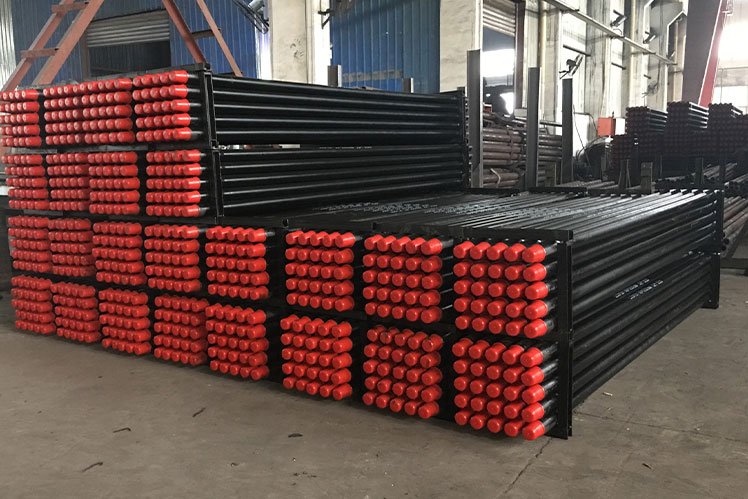
Dual Wall Rods (My Favourite for Difficult Jobs)
Okay, now this is where it gets interesting. The dual-wall rods consist of an inner pipe, which carries the mud, and an outer pipe, which handles the torque. Why do I like them? Because if you snap an inner tube (rare, but it does happen), you don’t lose the whole rod. And they cut down on pressure loss in long bores, so your mud pump doesn’t have to work overtime. I’ve had guys call me after their first dual-wall job and say, “Why didn’t you make me buy these years ago?” Because I didn’t want to be pushy, Dave. That’s why.
Specs That Matter (Spoiler: It’s Not Just the Diameter)
When I first started, I thought “specs” were OD and length. That’s like judging a truck by its paint job. This is what I actually look for now, and what I pester my customers to look for before they place an order.
Steel Grade and Heat Treatment
This is the heart of the rod. Most rods are made of 4140 or 4130 chromoly steel, but the magic is in the heat treat. Too difficult? They’re brittle – crack like a cracker. Too gentle? They will bend and twist under load. I always ask my supplier (yeah, even I have to ask) about the hardness range in HRC and the impact toughness values. If they can’t tell me that in less than 30 seconds, I walk.”
Wall Thickness (Thick vs. Thin)
Here’s a pet peeve. Some sales guys talk about “heavy wall” but don’t give you the actual number. That’s like saying “it’s big” but not telling me how big. I want to know the exact wall thickness in inches or millimetres, and I want to know the minimum tolerance – because manufacturing variation is real. I’ve had “0.375” rods measured at 0.365” and they fail way before they should.
Threaded Connection Type
Oh, this one fools everybody. You’ve got your API (standard), your proprietary flush-joint, your dual-start threads… and they are NOT interchangeable. I can’t tell you how many times I’ve had a guy call me in a panic because he ordered rods with the wrong thread and now the whole crew is standing around twiddling their thumbs. My golden rule: always get a thread gauge with your first set and check it against your existing tooling. It’s a $50 investment that saves you a $5,000 headache.
Length (It’s Not All About Reach)
Shorter rods (10-15 feet) are easier to manage and to stow on small rigs. Longer rods (20-30 feet) means fewer connections, less chance of thread wear, less time tripping in/out. But here’s the kicker: longer rods need a bigger bend radius, so if you’re working in tight city lots with short setback, it may make you want to cry when you run into those 30-footers. Always tell new guys: measure your setup space before you order. I learned that the hard way when a customer returned 100 rods because his trailer couldn’t fit them.
The One Spec No One Talks About (But Should)
Straight. I know, boring. But I want to tell you a brief story.
Last year, a customer complained that his rods were “whipping” in the bore – vibrating like crazy, wearing out his stabilisers, and causing his operator’s back to hurt from the shaking. We checked everything. RPM, mud flow, ground conditions. It turned out the rods had a slight bow to them, maybe .020” over 20 feet. Hardly visible to the eye. But at 200 RPM, that little bow just became a jackhammer.
And I ask all suppliers: What is your straightness tolerance? And if they say, “within industry standard,” I fight for the actual number. Good rods are straight to 0.010” per foot. Great rods are tighter even. Don’t be afraid to ask—it’s your back (and your drill string) that counts.
My “Cheat Sheet” for Choosing the Right Rod (Without Overthinking It)
I’m a lazy guy at heart, so I built myself a simple decision tree. Steal it if you want:
Soft clay / sandy loam / short bore (<500 ft) – standard-duty, API thread, mid-wall thickness. But the point is that Mixed ground (clay + gravel) / medium bore (500-1000 ft) → Heavy-wall, maybe dual-wall if you have an older mud pump. Obsessively monitor your thread match.
Rock/cobble/deep bore (>1000 ft) → Extra-heavy wall or dual-wall with premium heat treatment (look for impact values above 40 ft-lbs). And for the love of all that is holy, get the straightest rods you can afford.
One more thing: Don’t forget the makeup torque. There is a recommended torque for the connections on each rod. Over-tighten and leak mud, wear threads. Over-torque, you’ll stretch the box end. I have seen guys blame the rod when it was really their impact wrench having a bad day.
A Little Rant About “The Lowest Quote”
Ok, I’m going to get real for a moment. I know, budgets are tight. I have been there. But if you buy rods strictly on price per foot, I promise you’ll spend more on down time, early replacements and stressed-out crews. Or that you should run out and buy the most expensive one. What I am saying is buy the rod that fits your ground and your rig, not the one that leaves you with 200 dollars more in your pocket but twisted string at 600 feet.
I had a customer brag once about saving $3,000 on a set of “bargain” rods. Three weeks later he broke two of them in the bore, lost three days of production and spent $8,000 on fishing tools. Then he rang me up and said, “You were right. “I’m an idiot.” I didn’t say “I told you so” I just helped him spec out the right set and gave him a little break on shipping. Because that’s how we roll.
Maintenance Tips for Extending the Lifespan of Your Rods (By a Guy Who Sees Too Many Untimely Deaths)
Quickly, because I can’t help myself:
Clean your threads before each hookup. I don’t care if it’s raining or 100 degrees. Dirt and grit kill threads. Have a wire brush in your truck.
Use thread compound, the proper kind. No grease. Not engine oil. Actual pipe dope with the correct zinc or copper content for HDD.
Check for cracks after each hard pull. Run your fingernail across the joints of the tool. That’s a stress crack saying “hello,” if you feel a catch. Pull that rod out before it pulls itself out in the hole.
Keep them off the ground. Just a couple 2x4s underneath makes a world of difference—keeps moisture and rust off the threads.
Final Thought: You are not Buying Steel, You are Buying Confidence
If there’s one thing I’ve learned in five years it’s this: the best drill rod isn’t the one with the highest tensile number or the prettiest heat-treat chart. It’s the one you forget is even down there. When you’re 900 feet in, mud flowing, torque steady, and you’re just listening to the rig hum along — that’s the sweet spot. That’s what I’m chasing for every customer.
So next time you see a quote, or a pile of rods in a yard, ask yourself: “Is this in line with my ground, my rig, my gut?” Or if you are not sure call me. I’ll tell you the truth, even if it means recommending a competitor’s rod because we don’t make the exact size you need (yep, I’ve done that too). Because at the end of the day, I want you to finish that hole, pack up your equipment and leave without a horror story.
Now dig something. And for God’s sake, check the threads.
SHARE:
More Posts for You
- Traceability of HDD Drill Rods: The Case for Heat Lots and Serial Numbers
- API 5DP vs API 7-1: Which Standard Actually Controls Drill Rods for HDD?
- Welding or Repairing a Cracked HDD Drill Rod? The Hard No and Safer Alternatives
- Why Mixing Different HDD Drill Rod Brands on the Same String is a Bad Idea
- HDD Drill Rods for Hard Rock vs Soft Ground One Size Does NOT Fit All
- Best Drill Rods for Large-Diameter Pipe Installation (24″ to 60″ Reaming Passes)
- Friction Welding VS Inertia Welding on HDD Drill Rods What’s the Difference?
- Box vs. Pin End: Which Side of the HDD Drill Rod Fails First?