Developing a Smarter HDD Drill Rod Procurement Strategy: From Line Item to Performance Spec
Hey, grab a coffee — I want to talk about something that comes up in my inbox almost every week.
I have been selling HDD drill rods for about 5 years now. I work at a drill rod factory, I like talking about steel, threads, heat treatment, and fatigue life way more than my friends would like, and I’ve seen a lot of RFQ’s. Some are awesome. Some are… well, let’s say “creative.”
And the one that still makes me sigh is:
“100 pcs drill rod, 10 ft, best price.”
That’s all. Formation: n/a. No size rig. No twist. No bend radius. No plan B. Just a line item and price.
I know. Buying drill rods can feel like buying a consumable You want rods. You want a good price. You want them fast. But here’s what I’ve learned the hard way – and I mean watching customers learn it the expensive way: a drill rod is not a line item. It’s a performance specification.
The “line item” trap:
A line-item mentality sounds like this:
“How much is each?”
“What’s the cheapest rod you’ve got?”
“Just like last time, eh?”
“Can you beat this quote by 10%.”
I’m not saying price isn’t a factor. Of course it does . I’m a sales guy — I know the budget talk is real. But a drill rod is at the same time a structural member, a wear part and a mud conduit. It takes torque, tension, bending, vibration, abrasion, and often a little abuse from an operator having a long day. If you buy it like a box of bolts, you’ll start thinking at the level of bolts.
A contractor called me a couple of years ago. He bought another supplier’s batch of rods because the price was great. The rods looked all right. They weighed out fine. Then he took them for a river crossing with a nice bend radius and some tough mixed ground. After two days he had a galling thread, a joint that wouldn’t come together right, and a crew standing around watching the clock. The “cheap” rods cost him far more than the difference in the quote.
That’s the catch. You can see the price of each line item. The performance cost is not until it is.
The real look of a performance spec
When I ask customers for a “performance spec” I’m not trying to make the RFQ complicated. I’m trying to make sure the rod will work. For HDD drill rods, that often means talking about:
Rig and torque capacity – how much torque are you really putting through the string, including safety margin?
Tensile and torsional yielding, not just “strong steel”, but the numbers that count for your pull back and rotation.
Bend radius and bore path. Tight crossings are another animal than long gentle bores.
Thread type and make-up – compatibility with your existing rods, boxes and subs. Thread galling really kills the mood.
Wall thickness and wear allowance – how much abrasion do you expect and how long do you want the part to last between inspections?
Mud pressure and flow – the rod is also a pressure vessel, especially on longer bores.
Formation and ground conditions – sand, rock, cobble, clay and mixed face all affect a rod differently.
Heat treating and traceability. That’s where a lot of “same spec” rods stop being the same.
That’s the change: from ‘what does it cost per piece?’ to ‘what performance envelope does it need to survive?’.
And no, a performance spec doesn’t mean over engineering everything. It means fit for its purpose. A rod for a 20 ton mini rig doing short utility bores shouldn’t be spec’d like a rod for a maxi rig crossing under a highway. Over-specifying costs you money. Wasting crews on undersizing.
My little rant: “same as last time” is not a spec
Okay, mini rant time.
One of the most dangerous phrases in the drill rod buying process is “same as last time.” Last time it might have been another project. Last time it could have been a different rig. Last time it could have been a batch with a good combo of steel chemistry and heat treatment. Maybe you were lucky last time, the operator was gentle. This time you’ve got a different crew.
I’m not suggesting you re-engineer your entire procurement process for every order. But if you are going from one formation to another, or one rig to another, or from utility work to a river crossing, then you need to at least take a second look at rod spec.
I’d rather ask you five annoying questions up front than get “the threads failed” three weeks later. Trust me, I’ve had both conversations and the first one is way more fun.
Smarter Buying Strategy: 5 Steps to Success
If we were sitting in your trailer or on a call here’s how I’d say it.
- Map the project, not just the part number.
What is the bore length, expected torque, pullback, bend radius, mud program and ground condition? That’s your performance envelope. - What is the job of the rod .
Is it a workhorse rod for utility holes? A long-distance crossing-stick? A rod that has to get along with an existing string? Write it down. - Assemble the rod in the tooling and rig.
Thread compatibility, make up torque and handling equipment matter. A great rod with the wrong thread is just a very expensive paper weight. - Ask for data, not just price
Steel grade, heat treatment, thread geometry, inspection criteria, traceability . If a supplier won’t talk about these, that’s a data point as well. - Monitor performance post-sale.
Wear, thread condition, failures, cost per foot drilled, inspection frequency. That’s what turns a line item into a real buying strategy.
The real sales pitch
I’m employed at a drill rod factory. Yes I want your order. But I’d rather sell you the right rod once than the wrong rod twice. The best buying strategy is not the lowest line item price. It’s the one where the rod meets the performance spec, the crew keeps drilling, and you don’t have to explain a thread failure to the project owner.
So next time you send an RFQ, try adding a few lines: rig torque, bend radius, formation, mud plan and what “good” looks like to you. I promise it won’t be painful. And if your RFQ says only “best price” – let’s change that together.
SHARE:
More Posts for You
- Developing a Smarter HDD Drill Rod Procurement Strategy: From Line Item to Performance Spec
- Which one lasts longer, one-piece forged drill rod or friction-welded drill rod?
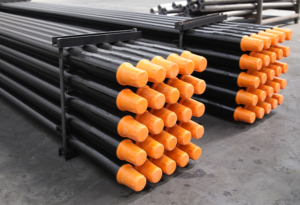
- HDD Drill Rod Selection for Engineers | Design and Analysis Fundamentals
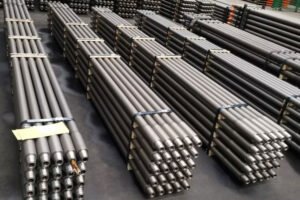
- Pre-Bore HDD Drill Rod Inspection Checklist: What to Check Before Every Job
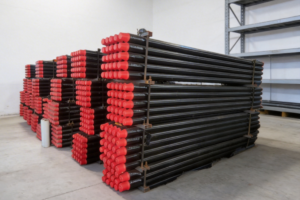
- HDD Drill Rod Warranty – What’s Covered and What Voids It

- Smart HDD Drill Rods: Sensors Embedded For Real-Time Monitoring
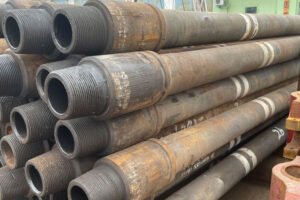
- Ultrasonic Wall Thickness Testing of HDD Drill Rods: Procedure & Limitations
- Choosing the right drill pipe supplier for your Vermeer D16x20