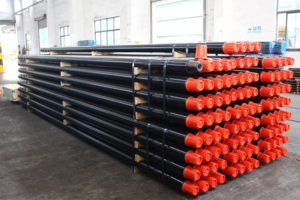
Best Drill Rods for Large-Diameter Pipe Installation (24″ to 60″ Reaming Passes)
Let me begin with a confession. When I got into the business some five years ago I thought a drill rod was a drill rod, basically. You know, put ’em together, spin ’em, pull ’em back, done. Thought if it worked for a 12 inch bore it would work for a 48 inch bore. Just… more of them, huh?
Yeah. I was mistaken. So damn wrong.
I remember my first “oh crap” moment on a big diameter job. We were pulling 42 inch HDPE under a river crossing. Not too bad these days. Maybe 2,000 feet. But we were on the third pass of the reamer, opening it up from 24 inches to 42 inches and the torque gage started doing this dance I did NOT like. The rig was creaking. The crew were staring at each other with that ‘is this normal?’ look.
And then—BOOM. Not a catastrophic failure, thank God, but we spun a connection. Lost a day and a half fishing the string and ate into every bit of profit on that job.
That was the day I learned that big diameter reaming is a whole different animal.
So let’s get down to what’s really important when you’re pushing 24 to 60 inches through the ground. Trust me, your basic drill rods aren’t going to do the trick.
The Reality Check: What 24″ to 60″ Reaming Really Means
That’s the deal with big diameter HDD work. When you’re installing pipe in that 24-to-60-inch range, you’re not doing “more” drilling, you’re doing a fundamentally different kind of work. Normally for a 48-inch pipe, you’re talking about a borehole about 64 inches. You are pushing a lot of dirt and rock.
And you’re not doing it in one go. You can start with a 9″ pilot hole and work up to 24″, then to 42″ and finally to the desired diameter. Multiple reaming passes = multiple stress cycles on every single rod in your string.
Here’s what that stress looks like in reality:
Torque loads that would make a smaller rig weep.
Cyclic bending each time your string follows the bore path
Axial tension on the pullback greater than 100,000 pounds
Vibration that will loosen connections you thought were tight
And the punch line? And all of this is happening hundreds of feet below where you can’t see it, can’t hear it, can’t fix it without a lot of cursing and wasted time.
What I Look for in a Large Diameter Drill Rod
After that river crossing disaster (and a few other learning experiences I won’t admit to) I created a check list. If you are doing 24-60 inch work, here is what you need for your drill rods:
- No Exceptions to Double-Shoulder Connections
This is non negotiable. Standard API threads? “Never mind. When you’re applying a lot of torque to a large diameter reamer, you need connections that can take the load. Double-shoulder designs provide a second torque shoulder within the joint which increases connection strength and fatigue life dramatically. They are the preferred choice for demanding rock drilling, large diameter reaming passes and very long crossings where torque and cyclic bending loads are extremely high.
Think of it this way, standard threads are handshake like. Double-shoulder is a bear hug. Which would you rather have, your multi-million dollar project in one piece?
- Steel, high grade—S135 minimum
You have choices. G105. S135 and above. For big diameter work, it’s S135 every time for me. The higher yield strength gives you more margin for error when things get ugly downhole. And things WILL get ugly down hole.
- Thicker Wall, More Weight
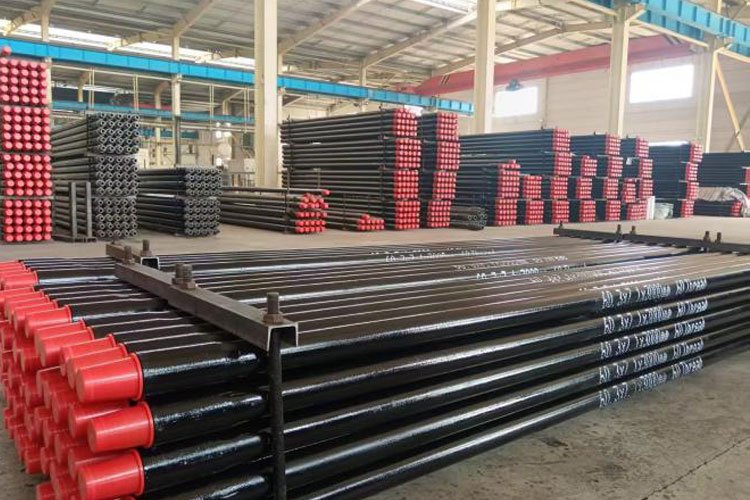
Heavy-weight drill rods are thicker walled and heavier per unit length than standard rods. So why does that matter? They prevent buckling and provide you with constant weight-on-bit, which is critical when drilling hard rock or long bores where conventional rods bend too much. They also provide a transition zone between stiff downhole tools and more flexible standard string that minimizes stress concentration.
- Strength at Fatigue
This one is tricky. The most common cause of drill rod failure is fatigue. It can occur at stress levels well below the rod rating, simply due to the constant flexing as it follows the bore path. Further reaming passes add more cycles. More cycles = More Fatigue More fatigue says… You guessed it, broken rods.
A few months ago I had a customer call me. Good guy, been running crews for about 6 years. “Man, we broke a rod,” he said. Two hundred feet or so down. He’d had a bad run, and he’d seen the needle on the torque gage rising, but he figured the rod would hold. It hasn’t. and that’s the thing, fatigue failures don’t give you a lot of warning.
The ‘Aha’ Moment That Started It All
After that river crossing job, I went back to our shop and really got into the numbers. I did the torque calculations, stress cycles, failure rates of standard versus heavy duty rods on large diameter jobs.
What I found was… disturbing.
We’d been under-specing rods for years. Nothing dangerous. Nobody got hurt, nothing disastrous happened. But we were leaving money on the table with downtime, fishing operations and premature rod replacement. The “savings” from cheaper rods were being lost to lost productivity.
That was the point where I stopped thinking of drill rods as a consumable, and started thinking of them as critical infrastructure. You’re not cutting corners on the thing that holds your entire operation together 500 feet underground.
Field Lessons from the Real World
Here’s what I tell my customers now:
Match your rods to your tackle. Check your maximum spindle torque, thrust and pullback Your drill rod needs a torque rating that is greater than your rig’s maximum output. That’s it.
Be careful in planning your reaming passes. “Don’t try to jump 12 inches to 48 inches in one shot – that’s how you break things. And don’t use equal increments either. Scientific method: Make sure average torque for each reaming pass is similar.
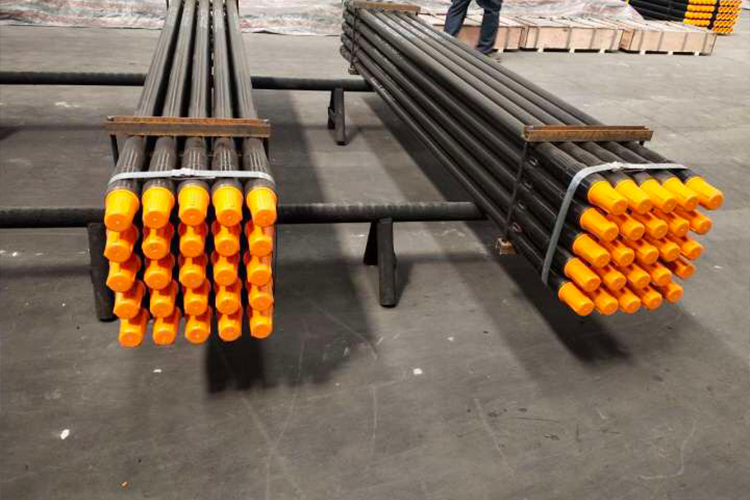
Check your rods. Religiously. Check for wear, bending and thread damage before each shift. If the rod is worn more than 3mm in diameter on one side, or 5mm average, or more than a quarter of the wall thickness – retire it. I know it’s hard to take a rod out of service. It is more painful to fish one out of a borehole.
Keep an eye on your torque. If you see it climbing, don’t just bull through. “Go away. Change your settings » Disasters in large diameter reaming usually start with “just a little more”.
Utilize good connections. This cannot be over emphasized. That link is the weakest link in the drill string. A properly torqued double-shoulder hookup will save you more headaches than almost anything else you can do.
The Bottom Line
Look, I’m not going to sell you the most expensive rods in the world. So here I am to tell you what really works, based on five years of watching crews succeed and fail on large-diameter jobs.
If you are doing 24 to 60 inch reaming passes you need:
Double-shoulder joints
S135 or better steel
Heavy wall construction
Serious fatigue resistant
And you need to treat your drillstring like the critical asset it is, because when you’re 500 feet down and 2,000 feet away from the rig, that string is ALL you’ve got.
That river crossing job I told you about? We did it. Longer than we planned, more expensive than we budgeted but we did it. And I learned more on that one job than a hundred smooth ones.
So here’s my offer. If you have a big-diameter job going on and don’t know what rods you need, give me a call. I’ve been in your place. I’ve made the mistakes so you don’t have to. And I’m glad to share what I’ve learned—even if that means admitting I was wrong a few times along the way.
Because in the end we’re all trying to do the same thing, get the pipe in the ground, keep the crew safe and make a little money on it. The right drill rods don’t guaranty success but the wrong ones will guaranty problems.
And nobody needs any more problems.
SHARE:
More Posts for You
- Traceability of HDD Drill Rods: The Case for Heat Lots and Serial Numbers
- API 5DP vs API 7-1: Which Standard Actually Controls Drill Rods for HDD?
- Welding or Repairing a Cracked HDD Drill Rod? The Hard No and Safer Alternatives
- Why Mixing Different HDD Drill Rod Brands on the Same String is a Bad Idea
- HDD Drill Rods for Hard Rock vs Soft Ground One Size Does NOT Fit All
- Best Drill Rods for Large-Diameter Pipe Installation (24″ to 60″ Reaming Passes)
- Friction Welding VS Inertia Welding on HDD Drill Rods What’s the Difference?
- Box vs. Pin End: Which Side of the HDD Drill Rod Fails First?