Traceability of HDD Drill Rods: The Case for Heat Lots and Serial Numbers
hey I’m a technical sales guy at an HDD drill rod factory. Five years in. I more talk about steel and threads and torque and mud than I do about football. And I’m gonna be honest. When I first started out, I thought heat lots and serial numbers were the boring part of the gig. Paper work for the paper work gods.
A customer called me one Friday afternoon.
He’d broken a rod on a job. Not funny. I asked him, “You got the serial number and heat lot on that rod?
“The one that snapped,” he said. “It’s in two bits.
I chuckled. He didn’t. And that was my eureka moment: traceability is not paperwork. It’s a time machine. ‘We were just guessing without those numbers. Bad rod? Bad heat treat? Bad day for rock? Quick we couldn’t tell. He had to pull the string, check everything out, and use up time he wasn’t getting back.
Then let’s talk about it. Not like a book. Like two people standing beside a rig.
A heat lot is:
When a steel mill produces steel, they pour a “heat. It has its own chemistry. Its own recipe. Then our factory can also heat treat rods in batches. Rods from the same heat lot are essentially siblings. Same DNA. Same batch.
That’s important because if one rod from a heat lot has a problem, we want to know about the others.” And if a rod breaks because it was side-loaded into a rock, we don’t want to send the whole family into a panic. The heat lot tells us where to look.
Sometimes you hear “heat number” instead of “heat lot.” Same thing. It is the batch ID for the steel.
How about the serial numbers?
The serial number is the fingerprint of the rod. Or its VIN number if you like trucks. That one rod, singular. It attaches to the heat lot, the date of manufacture, the type of thread, inspection records and so on.
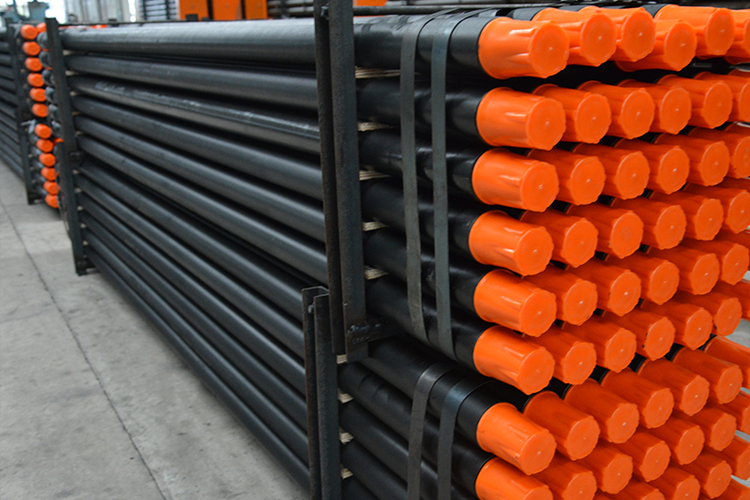
A serial number can tell you how old used rods are and where they came from if you buy them. If someone’s selling you “new” rods with no serial number, ask questions. Most real quality rods have a reason for an ID.
Why you should care? You’ve got mud to mix.
I know, I know. The last thing you want to do after a 12 hour shift is write down numbers. You need a shower and a cold drink. I understand. But that’s why those numbers are a godsend:
Quicker failure analysis & warranty.
I can get records in minutes if you call me with a serial number. Without it, we’re lousy coffee detectives.
It catches batch problems early on.
We can alert customers if we see multiple failures from the same heat lot. That’s safe. That’s dough. That’s not waiting for the next twist-off.
You know what is in your string.
Old rods, re-threaded rods, rods that have been run in high-torque jobs are not the same. Serial numbers allow you to rotate inventory and schedule jobs.
Value on resale
Traceable rods have more value. People trust them as buyers. You would.
Counterfeiting protection.
Yeah, it happens. Serial and heat lot info to verify you got what you paid for.
If I were you, I’d do this
I’m not asking you to generate a phone-book-sized spreadsheet. When rods come in take a photo of the serial number. Write the heat lot on the rack or a note on your phone. Do not scrape off the serial number. When a rod breaks, log serial, heat lot, location in the string, depth, torque, mud, formation, and take a few pictures.
And that’s it. 30 seconds at the receiving end can save you days in the field.
So yeah, lot of heat and serial numbers matter. It’s not that I like paperwork. Because when things go wrong, the turn “I think” into “I know.” And in HDD, “I know” saves time, money and a possible really bad day.
SHARE:
More Posts for You
- Traceability of HDD Drill Rods: The Case for Heat Lots and Serial Numbers
- API 5DP vs API 7-1: Which Standard Actually Controls Drill Rods for HDD?
- Welding or Repairing a Cracked HDD Drill Rod? The Hard No and Safer Alternatives
- Why Mixing Different HDD Drill Rod Brands on the Same String is a Bad Idea
- HDD Drill Rods for Hard Rock vs Soft Ground One Size Does NOT Fit All
- Best Drill Rods for Large-Diameter Pipe Installation (24″ to 60″ Reaming Passes)
- Friction Welding VS Inertia Welding on HDD Drill Rods What’s the Difference?
- Box vs. Pin End: Which Side of the HDD Drill Rod Fails First?