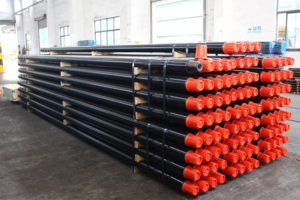
HDD Drill Rods for Hard Rock vs Soft Ground One Size Does NOT Fit All
I got a call from a contractor I had been working with for a while a few years ago. Let’s name him Mike. Mike was a guy who had been in the game forever – knew his stuff, ran a tight crew, always got the job done. But this time he called me in that voice. You know the guy. The “I just made a really expensive mistake” voice.
He’d bid a job that was supposed to be mostly soft ground—clay, loam, the usual. So he took his usual drill rods, got to the scene and started punching holes. The first couple hundred feet everything was fine. Then they struck a seam of rock that they had not bargained for. Not big but enough.
Mike thought he’d just work through it instead of changing out rods or changing tooling. Only a few feet, he told himself. “The rods can stand it.”
Spoiler alert: they couldn’t.
By the time they pulled that string out, two rods were twisted beyond repair, one had stress fractures that were obvious to the naked eye, and the crew lost a full day of production. The job went over budget, the client was unhappy and Mike spent the next week explaining to his accountant why he had to drop five figures on replacement rods.
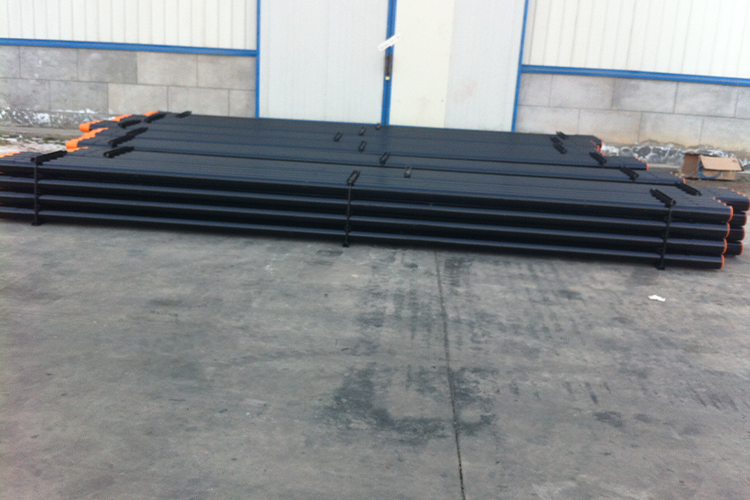
That’s when Mike had his aha moment. And really? I see this happen a lot more than it should.
So that’s the deal. Soft ground is not the same game as hard rock.
In soft ground — clays, loams, sandy soils — the drilling fluid does much of the work. It takes away the cuttings, keeps the bit cool, and helps you steer, too. “Your drill-rods aren’t down there fighting for their lives. API rods with mid wall thickness are generally more than adequate. They don’t need to be over-engineered, because the ground isn’t trying to kill them.
Rock? Rock is a completely different beast.
For directional drilling purposes, “soft” rock is around 5,000 psi, and “hard” rock is 25,000 psi and above. This is not a trivial difference. That’s the difference between cutting butter and trying to cut concrete with a butter knife.
In hard rock, your drill rods are under constant attack. High demand for torque. Severe vibration. Impact loads to cause a lesser rod to beg for mercy. And the real murderer? Tiredness. At every turn, every jounce, every little jolt, microscopic stress is applied to the metal. Do it enough times and you will snap eventually.
It’s the fatigue that’s actually keeping me up at nite.
I have seen rods fail from fatigue that looked perfectly fine on the outside.” No warning signs, no visible damage. But inside? For months the metal had been gradually giving way. So in hard rock applications, you need rods that are more fatigue resistant – normally S135 steel or better. They’re more expensive at first but I guaranty you they’re cheaper than fishing a busted rod out of a 2000-foot borehole.”
And let’s talk about the different kinds of rods for a second.
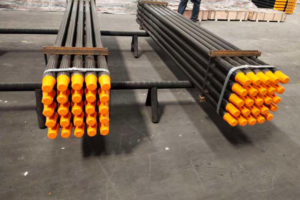
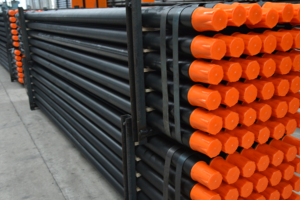
No wonder we have friction style (摩阻式) and mechanically-locking (机锁式) drill rods. Friction rods are great for soft ground. They transmit torque through friction, they are quick to connect/disconnect, and they don’t need to be overbuilt. But in rock or cobble layers? You want mechanically locking rods that transfer torque by positive mechanical engagement. No slip, no wasted energy, just pure power into the cut.
So what’s the takeaway here?
Now I am not saying that you have to buy the most expensive rods on the market for every job. That would be moronic. But I say this: know your ground, and match your rods to it.
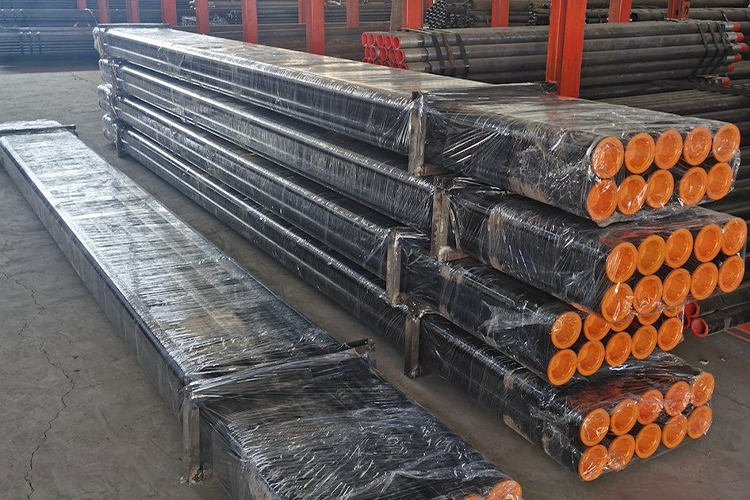
If you’re mostly in soft clay and sandy loam, standard rods will do you fine enough. But if you are doing jobs with any real rock, or worse, mixed ground where you do not know what is coming next, buy rods that can handle it. The cost of the wrong rods isn’t just the rods themselves. It’s the time off. It’s the missing production. It’s the angry customer. It is that voice, that phone call to your supplier.
Ask Mike. He’s aware.
Got questions on the right rods for your next job? DM me. I’ve been doing this long enough to have seen just about everything and I’m pleased to assist you to avoid the mistakes I’ve seen other people make.
SHARE:
More Posts for You
- Traceability of HDD Drill Rods: The Case for Heat Lots and Serial Numbers
- API 5DP vs API 7-1: Which Standard Actually Controls Drill Rods for HDD?
- Welding or Repairing a Cracked HDD Drill Rod? The Hard No and Safer Alternatives
- Why Mixing Different HDD Drill Rod Brands on the Same String is a Bad Idea
- HDD Drill Rods for Hard Rock vs Soft Ground One Size Does NOT Fit All
- Best Drill Rods for Large-Diameter Pipe Installation (24″ to 60″ Reaming Passes)
- Friction Welding VS Inertia Welding on HDD Drill Rods What’s the Difference?
- Box vs. Pin End: Which Side of the HDD Drill Rod Fails First?