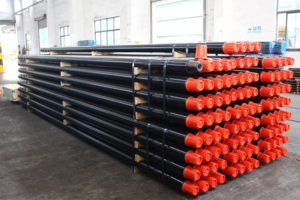
HDD Drill Rods Torque and Pullback Limits: Don’t Go Beyond These Numbers
Let me tell you about the worst phone call I ever received.
It was a Tuesday afternoon, maybe 3pm. One of my regular customers, good guy, running HDD crews for about six years calls me up. But his voice didn’t sound right. You know that voice? The one where you know something expensive has happened?
“Hey man… we broke a rod. About two hundred feet down.”
Two hundred feet. That’s not a quick fishing job. That’s a “shut down for two days and pray” scenario.
I asked him what was the matter. He said: ‘I was really pushing a rocky section, and the torque gauge just kept climbing. He reckoned the rod would hold it. Thought he’d just ride it out.
He was mistaken.
That little voice in his head that said, “Maybe I should back off. He took no notice. And it cost him about eight grand in lost time, fishing gear and a new set of rods.
So let’s talk torque and pull back limits. Not that I want to lecture you. Because I really don’t want you to be that guy on the phone.
Why These Numbers Are So Important
Fatigue is the most common cause of drill rod failure in mini-HDD operations. Here is the thing that surprises a lot of people. And the real kicker is that it can happen at stress levels well below what you would normally consider “dangerous”.
That’s the part that messes with your head.
You look at your torque gauge and think “I’m only at 70% of what this rod is rated for, I’m good.” But what you’re not factoring in is the cyclic bending stress that’s already kicking in because your rod is being forced to follow a curved path. That stress is the repeated back-and-forth between tension and compression, over and over again, on top of whatever torque and pullback you’re putting on it.
It’s like bending a paperclip to and fro. It doesn’t crack at the first bend. Or the 10th. Or the 10th. But in the end? Bam.
And when a rod breaks underground, it’s not just the cost of the rod. It’s time for a break. It’s the fishing business. It’s the crew sitting around getting paid while you try to figure out how to get your broken shit out of the hole.
Torque Limits: What You’re Actually Facing
Okay, let’s get into the numbers a little bit. But I promise you it’ll hurt like hell.
Each drill rod has a torsional yield strength, which is basically how much twisting force it can withstand before it begins to deform permanently. For example, a 2.875-inch S-135 drill pipe might have a torsional yield strength of approximately 15,900 ft·lbs. But here’s the thing. That’s the yield number. There is where the permanent damage starts.
That’s not a number you want to be at.
In fact, the IADC drilling manual recommends that the torque used to drill should not exceed 80% of the makeup torque rating. That’s your cushion for safety. That’s the difference between “pushing it” and “pushing your luck.”
I had another customer once, different guy, same story, had a rig that could put out way more torque than his rods were rated for. He decided to use the same rods he always used, because they were cheaper. Saved a few hundred bucks up front.
Then he broke one off at the joint. The joint area is the weak point of the whole pipe and that is where most of the field failures occur. And the thing is. He didn’t stow a cent. He’d paid so much more to get that rod out than he would to buy the right rods in the first place.
Pullback Limits: Don’t Let the Rig Fool You
The other half of the equation is the pullback. Your rig may be rated for 100,000 lbs of pullback, but that doesn’t mean your rods are.
I see this all the time. Guys look at the rig specs and say, “Well the machine can do it so the rods must be able to do it”.
No. It doesn’t work like that.
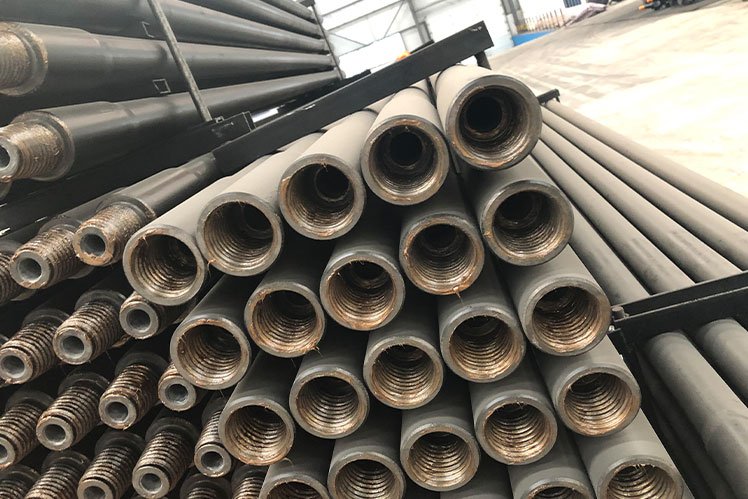
Your drill string is only as strong as the weakest link. Usually, the weakest link is the connection, the threaded joint where two rods screw together. The tool joint pin tensile strength is determined based on the cross sectional area at the thread root. That is a much smaller region than the body of the rod. So when you’re pulling hard, that’s where the stress concentration is.
And what if you are sharing tooling between rigs with different specs? You’re asking for trouble! What works OK on one size rig may be too small on a larger rig. Use undersized tooling on a rig with higher torque and pullback ratings and you can destroy your tools, slow production, trash your rig and create downtime.
The “Just a Little More” Trap
This is the one people get to.
You are in the middle of a pullback. Reamer is hauling. That mud’s on the move. You’re almost there. And you think, “Well, I’ll just add a little more torque. A few more pulls back. Just to get out of this hard place.”
I see. I do. Production pressure reality. You have a schedule to meet, a crew to pay, a customer waiting.
But that “just a little more,” that’s how rods break. That’s how threads strip. That’s how you get a fishing job that’s more than the whole project was worth.
One of the guys I work with, who has been in the industry for 20+ years said something that stuck with me. The gauge don’t lie,” he said. Your gut may, but the gauge does not.”
If your torque gauge is creeping up and you are getting close to that 80% mark, this is your sign. “Back away!” Re-examine. Change your strategy. Not just go through it and hope for the best.
DON’T GET INTO TROUBLE!
This is what I tell my customers. And yeah, I know it sounds easy. But works basic.
Know your rod specs. Not just the diameter and the length. Know the shear yield strength. 2. Understand the tensile yield strength. Keep that information available on the job site.
Match your tool to your rig. And don’t use undersized reamers or connectors just because they are lying around. Wrong tool, wrong procedure can put your job on hold, temporarily or permanently.
Watch who you connect with. Most of the failures occur at the joint. Keep your threads clean, greased and covered when not in use”. Use thread gauges to check them regularly.
80% rule. Don’t exceed 80% of your makeup torque unless absolutely necessary and even then be careful.
And most importantly – listen to your machine. That gauge ain’t there just for decoration. If it says something’s wrong, pay attention.
The bottom line:
Now I’m not saying you need to buy the most expensive rods out there. I’m here to help you not break the ones you do.
Because at the end of the day, a snapped rod isn’t just a piece of equipment. It’s a matter of time. A financial problem. Headache problem. And we don’t need any more of those.
So, the next time you’re on a job and you get that feeling that you can push just a little harder, think about that phone call I got on that Tuesday afternoon. Remember the guy who thought his rod could handle it.
SHARE:
More Posts for You
- Traceability of HDD Drill Rods: The Case for Heat Lots and Serial Numbers
- API 5DP vs API 7-1: Which Standard Actually Controls Drill Rods for HDD?
- Welding or Repairing a Cracked HDD Drill Rod? The Hard No and Safer Alternatives
- Why Mixing Different HDD Drill Rod Brands on the Same String is a Bad Idea
- HDD Drill Rods for Hard Rock vs Soft Ground One Size Does NOT Fit All
- Best Drill Rods for Large-Diameter Pipe Installation (24″ to 60″ Reaming Passes)
- Friction Welding VS Inertia Welding on HDD Drill Rods What’s the Difference?
- Box vs. Pin End: Which Side of the HDD Drill Rod Fails First?