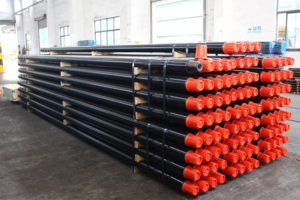
Why Mixing Different HDD Drill Rod Brands on the Same String is a Bad Idea
Hey there folks, it’s me again, your friendly neighborhood HDD tooling guy from the factory. I have been doing this for about 5 years now and I have seen some beautiful bore jobs and some that I wanted to hide behind the mud tank. Grab yourself a coffee (or energy drink, no judgment) and let me tell you about one of the easiest ways to screw up a job – and I mean literally.
The “Click” Moment.
Let me remind you of a job that still gives me the creeps. We were pulling a 2 inch line under a four lane highway. The ground was rocky clay and the conditions were decent and everything seemed to be going along well. Then bang, the rod twisted off right at the box end. “Lost the hole, lost the reamer, lost a whole day. The super was yelling. I was perspiring. Finally when did we find out what happened? Somebody had mixed rods of two different brands on the same string.
And I thought: That doesn’t mean it belongs here just because it threads on.
The “They Look the Same” Trap
The point is. You got one box of rods from one brand and another box from a different brand. Both are 2-3/8″ they have the same thread count, they screw together just fine on the rack. So what’s the problem eh?
Incorrect.
Other thread shapes Various shoulder angles. Various compositions of steel. Various heat treatments. Different manufacturing tolerances. Tie them together and you have a dog married to a cat. It will work for a while. Then blood will come.
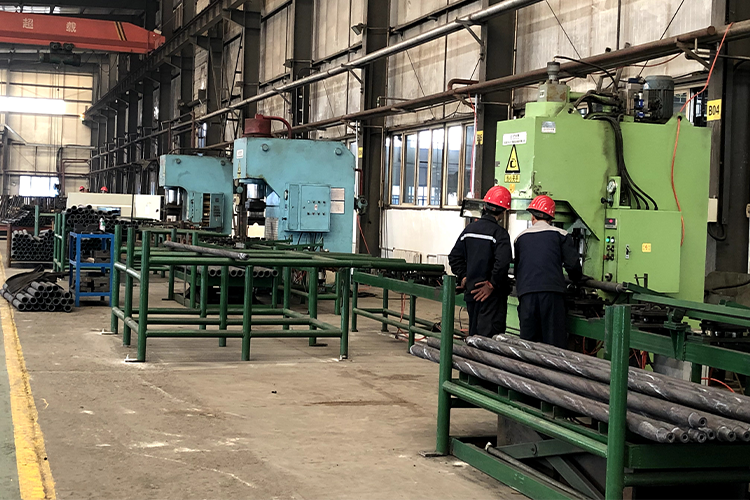
I’m not being dramatic. Some manufacturers might cut their threads to a slightly different taper. Another may use a proprietary alloy blend with other flex characteristics. A third may have a different shoulder design that “seats” at a slightly different torque. These are not cosmetic differences, they change the way the connection behaves under load.
What Really Goes On Down Hole
This is where it gets nasty. Mixing brands means you are creating a string with inconsistent mechanical properties. One rod may be stiffer. One might bend more. The connections may not be fully torqued at once — the nose, shoulder and thread flanks must all engage together and if they don’t the load is concentrated on one surface rather than being evenly spread.
The outcome? Excessive wear of the threads. It sticks in your craw. Flaring of shoulders. Make-up torque readings inconsistent. And finally, snap, a rod failure downhole that costs you a day, a reamer and your sanity.
I’ve seen some aftermarket rods that were “compatible” with a major brand that didn’t even match the thread timing. Galling and shoulder damage occurred after only a few make and break cycles. That’s not “saving money” that’s buying a headache and a warranty void.
But isn’t there a benchmark in the industry?
That’s a good question. There are API standards for threads—IF (Internal Flush), REG (Regular), those sorts of things. But there is a catch. Those standards define the thread geometry, not the whole connection design. Even if different manufacturers are using API specs, they can end up with different shoulder angles, different steel grades, different heat treatments. And that’s not even getting into proprietary connections that aren’t API at all.
Even if the threads are fine on the surface, the different steel and different heat treatment react differently to the same load. It’s like putting a brand new tire on one wheel and a bald tire on the other and wondering why you are in the ditch.
“One Brand Per String” Guideline
Look, I’m not saying I’m selling you the most expensive rod out there. I’m here to save you from you. This is the rule I live by, and I tell every customer the following:
One string, one brand. One line for each wear level. Period.
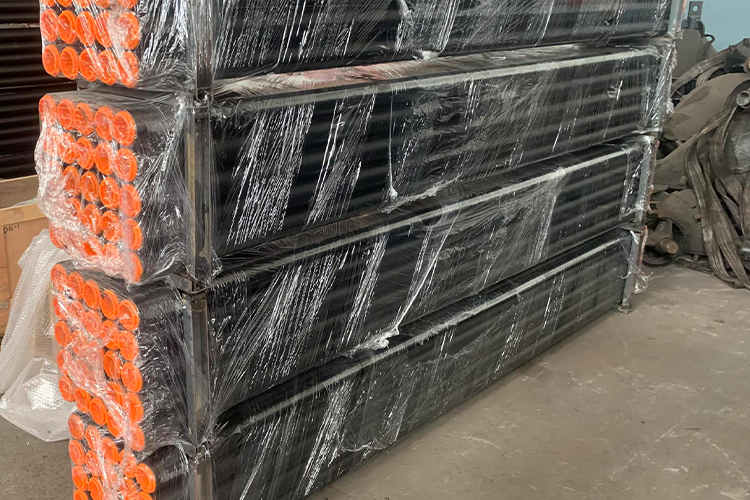
Also, don’t mix old rods with new rods of the same brand. A used connection has a different torque-characteristic than a new connection. Mix them and you have inconsistent make-up, uneven load distribution, and premature failure.
Choose a rod, stick with it, label your racks and make it a habit. That’s not bureaucracy. That’s defending productivity.
Bottom line
A rod string is only as good as its weakest link. When you mix brands you are introducing variables that you have no control over – different metallurgy, different thread geometry, different flex characteristics. You lose track of what’s on the string, you lose control of how it behaves.
A mismatched rod failure is not the cost of the rod. It’s the hole you can’t locate. The reamer you can’t locate. The day you can’t locate. The pissed-off customer. The standing-around crew with nothing to do. That adds up quickly.
So do yourself a favor: Use a single brand per string. Your back and your wallet will thank you for it.
Questions ? Contact us. Anything about rods, threads, and all the stuff that keeps us up at nite makes me happy to talk.
SHARE:
More Posts for You
- Traceability of HDD Drill Rods: The Case for Heat Lots and Serial Numbers
- API 5DP vs API 7-1: Which Standard Actually Controls Drill Rods for HDD?
- Welding or Repairing a Cracked HDD Drill Rod? The Hard No and Safer Alternatives
- Why Mixing Different HDD Drill Rod Brands on the Same String is a Bad Idea
- HDD Drill Rods for Hard Rock vs Soft Ground One Size Does NOT Fit All
- Best Drill Rods for Large-Diameter Pipe Installation (24″ to 60″ Reaming Passes)
- Friction Welding VS Inertia Welding on HDD Drill Rods What’s the Difference?
- Box vs. Pin End: Which Side of the HDD Drill Rod Fails First?