Premium vs Standard HDD Drill Rods: Is the Investment Worth It?
Let me start with a confession
I was a plain rod man.
When I was working on a small rig for a utility contractor I bought the cheapest rods I could find. Because hey, times were hard, and the boss always said, “steel is steel.” And for a time? It worked. Shallow bores, short pulls, sandy ground. No fuss.
Then one job changed my mind… for good.
We were drilling a 300-foot bore underneath a four-lane highway. Shot rock and cobble About 250 feet down I felt the drill head snag. I backed away, tried to turn slowly – and CRACK. The rod snapped clean off at the box end. And just like that, six hours of work turned into a fishing trip from hell.
That night, lying on a creeper under the rig, covered in drilling mud and bad decisions, I made myself a promise: never again.
I now sell both types in a factory. And I tell every customer the same thing I wish someone had told me at the time.”But They Look the Same” — Yeah, That’s the Trap
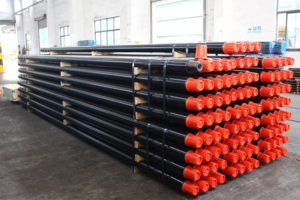
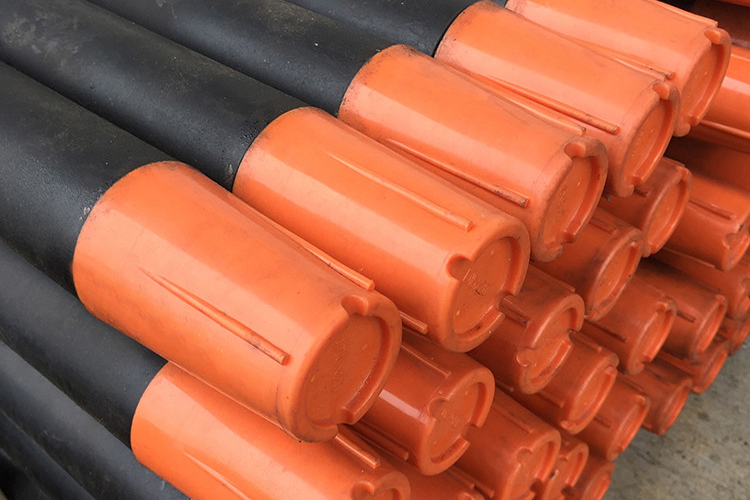
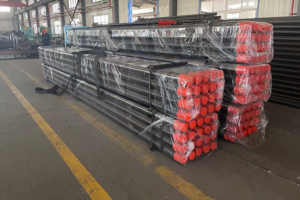
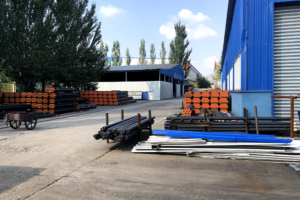
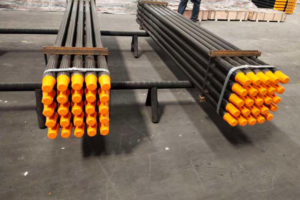
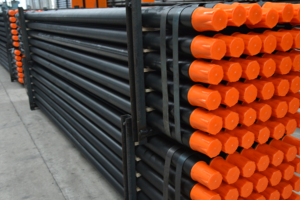
Visit any supplier’s yard and you’ll find almost no difference between premium and standard rods. Same orange paint. Same length. Same threads, kind of.
But that’s what you can’t see with your eyes
Standard rods are produced in a lower grade of carbon steel. They are heat treated to just pass basic tests. A CNC will cut the threads quick and good enough for a new rod, but they will start galling after a few make and break. They will stretch or wear unevenly.
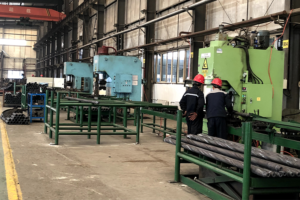
Premium rods are made from modified alloy steels (4140 or 4145H if you want to get nerdy about it). They are subjected to a controlled heat treatment – quenched and tempered (not just surface hardened). The threads are roll formed and not cut. That means the metal grain is flowing around the root of the thread instead of cutting through. Big difference in fatigue life.
I’ve put both under a microscope – literally. Standard rod threads display micro cracks after 50 make-break cycles. Premium blanks? Still clean after 200 cycles.
You won’t find that on a showroom floor. But your torque gauge senses it.
The Math Nobody Does (Until It Breaks)
I’ll walk you through a real-life example from a customer last year.
He had one choice to make:
Standard rods about $100 each
Premium rods: about $145 a piece
He needed 50 rods for his project. That’s $4,250 versus $7,250 — a $3,000 difference up front. “Impossible,” he said. “I’ll take the standard ones.”
Three weeks after that he rang me up. Two rods had been broken. One thread was stripped bare. I spent half the day fishing the broken pieces. In addition, he had to buy three new standards.
This is his real cost breakdown for that job:
Item Standard Extra
First 50 rods 7,250 4,250
Replacements (3 rods) +$255 $0
Downtime (6 hours @ $200/hr crew) + $1,200 $0
Fishing tool rental +$400 $0
Customer penalty for late finish +$800 $0
Total $6,905 $7,250
So for a paltry $345 more he could have zero headaches, zero fishing, zero angry customer phone calls.
He bought premiums for his next job. And thanked me .
Rock, Cobble and Other Rod-Breaking Friends
Here’s where the rubber meets the road — literally.
Drilling only in sand, clay, loam or soft silt, standard rods will be adequate. I sell standards to residential fence installers, small irrigation crews, and guys that do 50 foot bores for landscaping drains. Don’t complain.
But as soon as you hit cobble, weathered rock, hardpan or frost-laden ground, premium rods start to earn their cost.
Why? Two reasons why:
Twist resistance. Premium rods can handle more torque and not turn into a pretzel. Torque spikes when the drill head gets stuck on rock. Standard rods could bend (permanently) or snap. Premium rods bounce back.
Resistance to fatigue. Each time you turn, you add tension and bend to your rod. Standard rods develop micro-cracks after a few hundred rotations. Premium rods snigger it off.
I had a customer in Colorado, all mountain cobble and granite decomposed, He was burning a regular rod every three hundred feet. Changed to our premium line. Completed three jobs with zero failures. He phoned me and said “I don’t know what you did, but I’m not mad anymore.”
That’s the type of testimonial I love.
The Threads are Truthful
Want a quick test you can do in your shop today?
You have a regular rod and a good rod. “Screw them together by hand until the shoulders meet. Then try to loosen them just a quarter of a turn.
Cheaper rods will feel uneven, with some spots tighter and some looser. That’s either thread runout or bad taper matching.
The engagement on premium rods is smooth and even. They don’t “wobble” when you spin them. That consistency means less thread galling, less wear and fewer times you need a pipe wrench to break the connection after a long bore.
“I’ve seen crews take 15 minutes on every rod change fighting threads that just won’t go. Multiply that by 50 rods per bore, times 20 bores per year. That’s 250 hours of work thrown away. $100 an hour in crew costs? $25,000 down the toilet. Only from bargain-bin threads.
Premium threads cost more to buy. but they pay you back in time you don’t spend cussing at stuck tool joints.So When Should I Buy Premium For Certain?
Good question. My honest rule of thumb, not because I’m a sales guy, but because I’ve seen the carnage.
If you are standard use standard:
Your average bore is less than 200 feet
Soil, sand or clay, no big rocks;
You drill below 20,000 feet a year
Your rig is under 20,000 lbs pull back
Downtime is annoying, not financially devastating
Upgrade to premium if:
You drill in rock, cobble, or glacial till (anything that makes noise inside the pipe)
Over 400 feet bore
You run high torque (8,000 ft-lbs or more routinely)
You work under roads, rail lines, rivers, anyplace fishing’s a nightmare
Your contract calls for penalties for late performance
You just hate surprises (that’s me)
And a cheat here: You don’t need to buy all premium. Some guys run premium on the first 20 rods (highest stress) and standard on the rest. Gets the job done.
My Own “Light Bulb” Moment (The Short Version)
I told you about the highway bore from hell already. But there’s one more thing.
A few years ago I was helping a friend out on his rig. He’d just bought a brand new box of premium rods — his first ever. I kidded him. “Big wheel.”
His drill bit ground to a halt halfway down a rocky shaft. Torque needle pegged out. The whole derrick shook.
I winced, waiting for the crack.
Nothing at all. He backed up, worked the head back and forth, and got through it. The boring’s done. Pulled the rods, no damage, no stretch, no cracked threads.
He looked at me and said “See? “That would have killed two birds.
And then I knew it. Premium rods are not about being “better on paper”. It’s about getting a good night’s sleep. They’re about getting home without replaying the moment your rod snapped in your head.
That was the day I stopped being a sceptic.
A Few Maintenance Tips (Because Even Premium Rods Require Love)
Listen, I’m going to be frank with you. Quality rods are not indestructible. You still gotta take care of ‘em. This is what I say to my regulars:
Each time, wash your threads. Mud and grit are the sandpaper. Quick wire brush or thread cleaner before each make up. 30 seconds . Saves hundreds on sewing repairs.
Use a good thread compound. Not the $5 bucket of lard in the farm store. Real API-modified thread dope with solid lubricants. Really makes a difference on the galling.
“Don’t over-torque the connection.” It’s the shoulder contact that counts, not how hard you can reef on it. Over-torque stretches threads and leads to fatigue failure.
Check for wear marks. If you see a shiny ring near the root of the thread, that is fretting. It means the connection is out of line or loose. Fix it before it breaks down.
Properly cared for, premium rods will last 3-4 times longer than standard rods. If you neglect them they die young, as any tool does.
The Bottom Line (Said Like a Friend, Not a Salesperson)
This is what I really think.
If you’re drilling easy ground and watching every penny buying standard rods. No shame. I sell a bunch and they work good for the right jobs.
But what about hard ground, long bores and situations where a snapped rod ruins your whole week? Don’t be cheap. Subscribe for Premium. The extra dollars hurt right then – when you buy them. The pain of broken rods is painful every time you’re digging for a fishing tool at 10pm.
Ihave been on both sides. The sales side and the service side. And I promise you, your future self will thank your present self for shelling out a little more.
Still not convinced? Write me a few lines. What is your average ground, rig size and footage per month? Even if I sell you the cheaper rods, I’ll give you an honest answer.
- Let me start with a confession
- But that’s what you can’t see with your eyes
- The Math Nobody Does (Until It Breaks)
- Rock, Cobble and Other Rod-Breaking Friends
- The Threads are Truthful
- My Own “Light Bulb” Moment (The Short Version)
- A Few Maintenance Tips (Because Even Premium Rods Require Love)
- The Bottom Line (Said Like a Friend, Not a Salesperson)
SHARE:
More Posts for You
- Traceability of HDD Drill Rods: The Case for Heat Lots and Serial Numbers
- API 5DP vs API 7-1: Which Standard Actually Controls Drill Rods for HDD?
- Welding or Repairing a Cracked HDD Drill Rod? The Hard No and Safer Alternatives
- Why Mixing Different HDD Drill Rod Brands on the Same String is a Bad Idea
- HDD Drill Rods for Hard Rock vs Soft Ground One Size Does NOT Fit All
- Best Drill Rods for Large-Diameter Pipe Installation (24″ to 60″ Reaming Passes)
- Friction Welding VS Inertia Welding on HDD Drill Rods What’s the Difference?
- Box vs. Pin End: Which Side of the HDD Drill Rod Fails First?