The Hidden Cost of Cheap Drill Rods: Why Bargain Prices Lead to Expensive Breakdowns
Take a seat. Or, you know, whatever’s clean in the back of the truck. Let’s talk real for a minute about something that’s been bothering me for years.
I’ve been playing this nonstop trenchless game for more than 5 years. Worked the rigs, sold the steel, cleaned up when things went south. And if there’s one thing that gets my blood pressure up, it’s seeing a good crew get crucified by a bad piece of pipe.
It usually begins the same way. A new foreman or a purchasing agent calls me up, all proud of themselves. “We found these rods on the Internet for thirty percent less than your price. What’s your best number?
I understand. I really do.” The budgets are tight and the boss is breathing down your neck on margins. But every time I hear that, a little voice in my head screams, “Please, for the love of all that’s muddy, don’t do it.”
So let me tell you why I stopped competing on price and why I now focus on keeping you out of the hospital and out of the red.
The Day I Quit Defending Budget Rods
I remember this one job site like it was just yesterday. Hot summer. Sticky clay. And a 1,200-foot pull under a busy highway. The crew was using a new rig, top-of-the-line stuff. But they had a short drill-pipe. “It’s the same spec,” the owner told me. “Steel’s steel, ain’t it?”
I bit my lip.
The torque jumps about 200 ft. in. I watch the operator’s face turn white in the cab window. He backs away, tries to talk his way out of it but the rod’s twisting like a pretzel. Snip.
That’s not the worst part. The worst part is the silence after the snap. And then the swearing. Then there were the three days it took to fish out the broken piece from the bore hole.
That cheap rod cost them more than the steel did. It cost them:
72 hours of loss of service.
A $4,000 fishin’ tool rental.
Threads pulled, new set of subs.
And the look on the client’s face when we missed the deadline. Worth every penny.
The Myth of the “Micro-Crack”
Here’s the secret the cheap steel boys don’t want you to know. It’s not the initial strength in the bend. Most cheap rods look pretty good when you first drop them in the rack.
The problem is the fatigue life.
Imagine that you are bending a paperclip. You can do it once or twice, maybe ten times. Eventually that metal gets hot, gets stressed, and just … quits. Impurities are in cheap steel. It has stress fractures so small you can’t see them with a microscope.
You send that rod down the hole and you’re essentially playing Russian roulette with a 40-foot metal pipe.
I’ve seen guys blame the operator for “pushing too hard”. But 90% of the time it’s not the driver. It’s the metalurgy. “You can’t bully a cheap rod to be strong. No, you can’t.
But Wait, The Real Bill Is Coming
Look, a broken rod is a disaster. It’s loud, it’s scary, and it usually takes a crane. But that’s the obvious cost.
The hidden cost is the wear and tear on your gear.
A cheap rod will wobble and when it does that harmonic vibration doesn’t remain in the rod. It runs up the drive spindle, shakes your gear box and kills your bearings. I have had customers replace their whole top drive because they saved a few bucks on pipe.
suddenly that $500 you saved on a bundle of rods became a $15,000 gearbox replacement.
Math is hard, but that math is pretty easy.
My “Uh-Oh” Moment
I will be honest with you. I didn’t read this in a textbook. I learned it. Because I screwed up.
Early in my career, I sold a bunch of “economy” rods to a friend who was a contractor. I knew they were cheaper but the specs looked good on paper. Thought I’d save him a few bucks, he’d be happy, we’d get a beer.
We didn’t have that beer.
The third day he lost one rod. It was an easy pull even – just a regular bore under a creek. The rod snapped off flush with the entrance. We were four hours in the mud with a torch and a pipe extractor watching the sun go down.
He didn’t shout at me. He just looked at me, tired, and said, “I trusted you on this one.
That stung more than the yelling. I said to myself that day, I’ll never sell a rod I wouldn’t put on my own rig. I don’t sell it if I wouldn’t trust it in my own hands.
What I’m Really Looking For
So if not the price tag, what am I looking at?
I look at the threads first. The quality of a factory can be judged by the finish of the threads. Are they keen? Are they slick? Cheap rods have coarse threads that grab dirt. When you make the connection, that dirt becomes sandpaper. That’ll wear out your tool joints faster than you can say reamer.
Second I check the wall thickness uniformity. Good factories have lasers that check this in real time. Cheap ones are guesses. If one side of the wall is thicker than the other, it’s out of balance. It vibrates. It kills your machine. It is tiring.
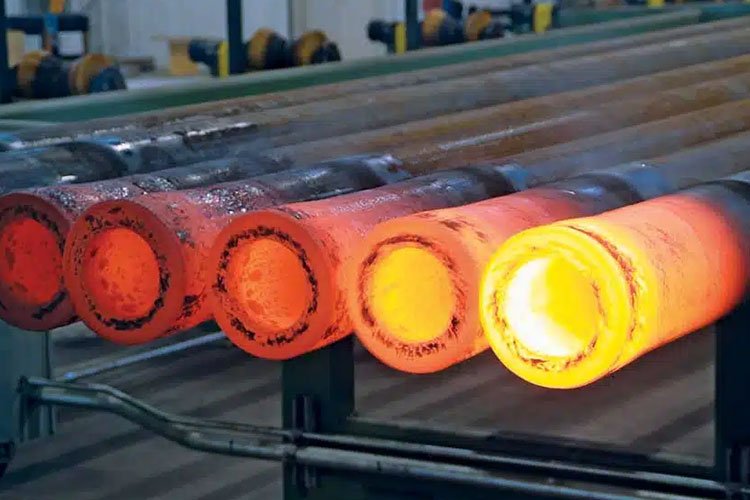
Third, the heat treatment: That’s the secret ingredient. You need the body flexible enough to take a bend but the threads hard enough to take the torque. Cheap rods treat the whole thing the same way. A disaster that’s one size fits all.
I’d rather sell you a rod for 20% more money that lasts 100% longer. You come out of the hole faster, with fewer headaches, and you actually end up paying less per foot drilled.
The “Expensive Rod” That Made the Difference
I had a customer call me a couple of months ago. He’d been using the cheap stuff and his back was against the wall. Three rods in a week gone. The project was losing money hand over fist.
I sold him the hard sell. The real McCoy. The kind of pipe that has certification papers that seem to weigh more than the rod itself.
He winced at the price. But he bought ’em.
Two days later I got a text from the site. Photo only It was a picture of the rod, covered in mud, sticking out of the hole with the reamer still on it.
The caption? “No wobble. 100% pull “Great value. Worth every penny.
It was not a silver bullet. It would not turn water into wine. But it was honest steel. It did what it was supposed to do, without any frills.
Let’s Get Real
I am not saying you have to buy the most expensive rod on the market for each job. Sometimes the ground is soft and the pull is short and you just have to get it done.
But when you’re doing a long bore, or a hard pull, or working near sensitive areas? Do not, please, please, check the price tag first. Check the spec sheet. Check the background of the manufacturer.
Because when you’re 500 feet down and your steering starts feeling “mushy”, it’s too late to renegotiate the price.
If you have any doubts just drop me a line. I’ll tell you the truth. The truth might cost a little more up front…but it’s a whole lot cheaper than the alternative.
Be safe out there. And for god’s sake keep your threads clean.
SHARE:
More Posts for You
- Traceability of HDD Drill Rods: The Case for Heat Lots and Serial Numbers
- API 5DP vs API 7-1: Which Standard Actually Controls Drill Rods for HDD?
- Welding or Repairing a Cracked HDD Drill Rod? The Hard No and Safer Alternatives
- Why Mixing Different HDD Drill Rod Brands on the Same String is a Bad Idea
- HDD Drill Rods for Hard Rock vs Soft Ground One Size Does NOT Fit All
- Best Drill Rods for Large-Diameter Pipe Installation (24″ to 60″ Reaming Passes)
- Friction Welding VS Inertia Welding on HDD Drill Rods What’s the Difference?
- Box vs. Pin End: Which Side of the HDD Drill Rod Fails First?