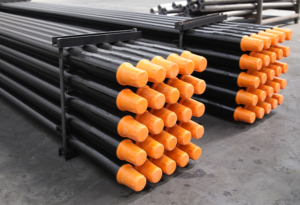
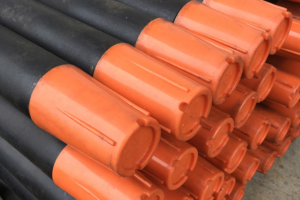
HDD Drill Pipe S135 1.32″ x #200 for Vermeer D6x6 Navigator
Hey, let’s talk about something that doesn’t get nearly enough airtime in the HDD world: the little pipe that makes a Vermeer D6x6 actually earn its keep.
I’ve been around drill pipe long enough to see fashions come and go. Big rigs get all the glory—everyone wants to debate 5-inch vs. 6-5/8, double-shoulder vs. API, S135 vs. whatever the latest “super steel” flavor of the month is. Meanwhile, the D6x6 crowd—the utility crews, the fiber guys, the small-lot contractors doing the unglamorous 200-foot shots day in and day out—gets sold whatever’s on the shelf. And honestly? That bugs me a little.
So let’s fix that. This is my no-BS take on the 1.32″ × #200 S135 drill rod for the D6x6—what it is, why it matters, and where I see folks burn money without realizing it.
First, the D6x6 numbers, because context matters
The D6x6 puts out 5,500 lb of thrust and pullback and 550 ft-lb of rotary torque, turning 1.32-inch rod at up to 180 rpm. It’s a mini-HDD workhorse—not a maxi rig, not a backyard toy. The rod it eats is 6-foot, 1.32-inch OD, #200 thread, and the whole machine weighs in around 3,240 lb. That’s a tight, towable package. But here’s the thing: “mini” does not mean “gentle.”
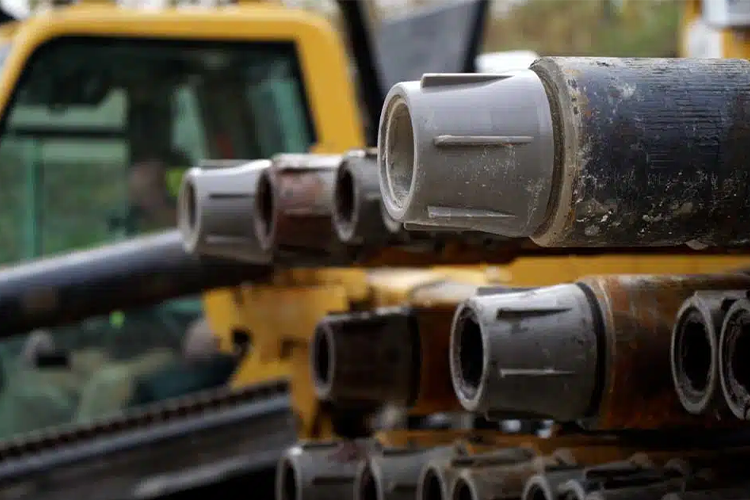
A D6x6 on a tight-radius bore puts more bending cycles into its drill string per foot than a D100x140 ever will on a long river crossing. Small radius means brutal fatigue life.
Why S135 isn’t overkill here
I hear it all the time: “It’s just a D6x6—why do I need S135? G105 is cheaper.”
Fair question. Here’s my answer. S135 gives you 135,000 psi minimum yield—not because you’re planning to yank the machine to its limit every day, but because fatigue doesn’t care about your average day. It cares about the bad day: the cobble you hit at 80 feet, the reamer that grabs, the steering correction you shouldn’t have made.
S135’s extra strength and toughness are your margin for the bore that doesn’t go to plan. And on a mini rig, where the bend radius is tight and the cycle count piles up fast, that margin is not a luxury. It’s the difference between finishing the shot and fishing a broken rod out of a 4-inch hole.
For the record, the 1.32″ × #200 rod in S135 is rated for 900 ft-lb of torque and a 57-inch bend radius in D6x6/D8x12-class applications. Your D6x6 tops out at 550 ft-lb. That’s headroom. You want headroom.
The #200 thread: don’t get cute with it
I’ll be blunt: the #200 connection is not where you want to experiment. It’s a small, field-proven thread, and the D6x6’s entire rod rack, breakout system, and tooling ecosystem are built around it. I’ve seen guys try to mix and match “equivalent” small threads to save a few bucks on a batch of rod. It always ends the same way: galling, inconsistent make-up, and a thread that lets go on the one bore where a breakdown costs you a crew day and a pissed-off homeowner.
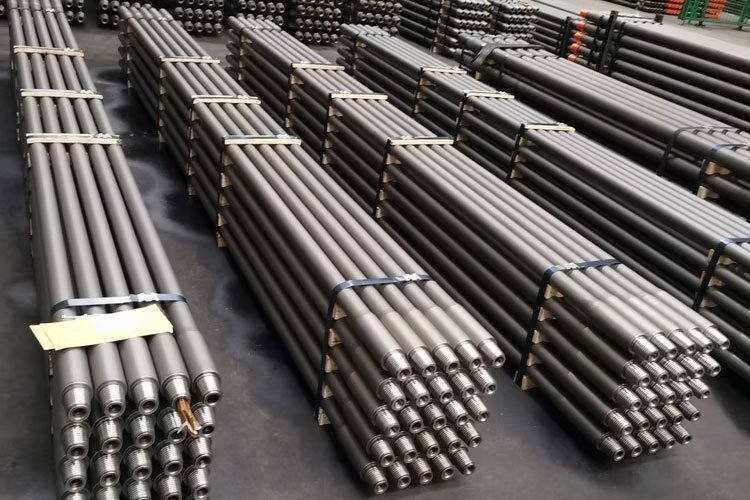
The #200 is also where I see the single most common wear point on mini-rig pipe. Fatigue failures on mini-HDD rod can happen at the joint or the body depending on the pipe type, and the stress concentration at the joint is roughly three times the simple bending stress in the body. Translation: your threads are doing the hard labor every time you steer. Inspect them. Look for pulled, rounded, or flattened threads and galling—not just “does it screw together”. If your threads look like they’ve been chewed on, they’re telling you something.
One-piece forged vs. friction-welded: the quiet fork in the road
Here’s something I wish more D6x6 owners asked about. The rod spec sheet says “1.32″ × #200, S135, 6-foot.” But how that rod is made—one-piece forged upset vs. friction-welded—changes the fatigue story.
A one-piece forged rod eliminates the weld line in the upset transition. On a mini rig running tight arcs all day, that weld zone is exactly where you don’t want a stress riser. I’m not saying every welded rod is a time bomb. I am saying that when you’re buying rod for a machine that lives in the 57-inch bend radius neighborhood, the manufacturing detail matters more than the grade stamp on the tube.
The D6x6 is a small machine, but the physics of bending fatigue don’t scale down politely. Bending fatigue is the key factor in mini-HDD drill pipe life, and the cost of fatigue damage climbs fast once you’re drilling radii below about 100 ft. The D6x6 lives in that zone. Your rod should be built for it.
The “factory direct” conversation, without the sales pitch
I work at a drill pipe factory, so take this with the appropriate grain of salt. But here’s what I genuinely see: a lot of D6x6 owners end up with either overpriced OEM-branded rod that’s fine but carries a dealer-network markup, or the cheapest import rod they can find, which is fine until it isn’t. The middle ground—a rod built to the D6x6 spec, one-piece forged, S135, #200, with actual QC behind it—is where the value sits. You don’t need to pay for a logo. You do need to know what’s in the box.
If you’re running a D6x6, my advice is boring but real: match the rod to the bend radius and torque you actually see, not the brochure number; buy S135 for the bad day, not the good day; treat your #200 threads like the wear part they are; and ask your supplier how the rod is made before you ask for the price. The little pipe does the heavy lifting. It deserves the same scrutiny as the big stuff.
SHARE:
More Posts for You
- Horizontal Directional Drilling Tools: How to Compare Drill Rod and Backreamer Quotes
- 6 Warning Signs Your HDD Drill Rod Is Failing (Before It Breaks Downhole)
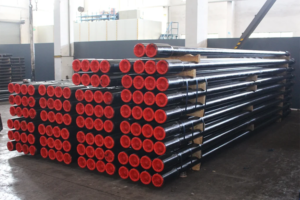
- HDD Drill Pipe S135 1.32″ x #200 for Vermeer D6x6 Navigator

- HDD Drill Rod ID and Flow of Drilling Fluid: The Importance of Inside Diameter
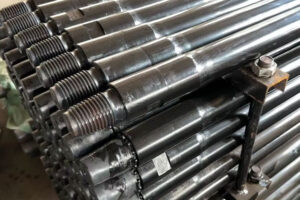
- How to Budget for HDD Drill Rods: Plan Replacements Based on Wear Rates
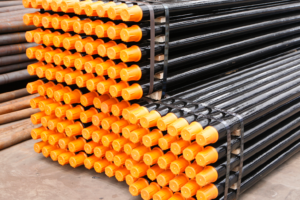
- HDD Drill Rod and Reamer Matching: Preventing Vibration and Uneven Wear
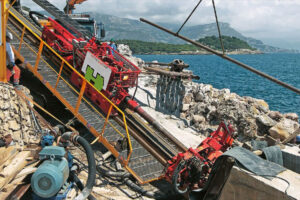
- Developing a Smarter HDD Drill Rod Procurement Strategy: From Line Item to Performance Spec
- Which one lasts longer, one-piece forged drill rod or friction-welded drill rod?