I’ve spent the last five years at a drill rod factory, and before that I was the guy on the other end of the phone listening to contractors say, “It just snapped. No warning at all.” And I get it—when you’re in the middle of a bore, the last thing you want to do is babysit your rods. But here’s the honest truth I’ve learned: a downhole break is almost never a total surprise. It’s usually a warning sign that got ignored.
So, yeah, I’m biased—I work for a drill rod factory. But I also see the failure reports, the photos, and the “what happened here?” emails. Most of the time, the rod didn’t fail because it was a bad rod. It failed because something was already wrong and nobody caught it.
Let’s go through six warning signs I’d want you to check before your next bore. And I’ll throw in a little personal ranting, because that’s just who I am.
Your threads are galled, shiny, or fit loose
This is the big one. Threads are the heart of your drill rod joint. If they’re galled—those rough, torn, shiny spots on the pin or box—you’ve got metal transferring and rubbing where it shouldn’t. And if the joint feels loose or wobbly when you hand-tighten it, that’s not “just how it is.” That’s wear.
Here’s the thing: a loose thread fit means the load is no longer sitting on the shoulder like it’s supposed to. It’s moving around, working the threads, and starting a fatigue crack right where you can’t see it. I’ve seen guys keep running a rod because “it still makes hole.” Yeah, until it doesn’t.
What to do: Clean the threads, look for galling, and check with a thread gauge. Use the right thread compound—not tractor grease, not whatever’s in the back of the truck. I’ve literally seen a guy use chassis grease on HDD threads. Buddy. No. Please.
Your shoulders are worn or not mating
The shoulder is the flat face where the pin and box meet. That’s the load-bearing surface. If it’s worn, dished, or beat up, the threads end up carrying load they were never designed to carry. Next thing you know, you’ve got a pin break downhole and everybody’s pointing fingers.
I remember a customer sending me a photo of a box shoulder that looked like a worn brake rotor. He asked, “Can I run it one more job?” I told him, “You can. But I wouldn’t stand near the rig.” Harsh? Maybe. But I’d rather hurt your feelings than hear about a rod breaking under a river.
What to do: Inspect shoulders for wear, galling, and poor contact pattern. If they’re not mating cleanly, don’t just crank more torque on it and hope. That’s not a strategy. That’s a future failure report.
Your rod body has wear flats or wall thickness loss
HDD rods live a hard life. They rotate against the bore wall, they get bent, they get pulled, and they wear. A little polish is normal. A wear flat that looks like someone took a grinder to one side? Not normal.
Wall thickness loss is sneaky because the rod still looks like a rod. But the body is getting thinner, and the strength drops fast. I’ve seen rods that looked fine on the outside until we measured them—and wow, yeah, that one was done.
What to do: Check for wear flats, deep scratches, and reduced diameter. If you’ve got a lot of hours on a set, use calipers or ultrasonic wall thickness testing. It’s cheaper than a fishing job.
You’ve got cracks at thread roots or upset transitions
This is the one that makes me want to grab people by the shoulders. Cracks love thread roots and the transition area where the body upsets into the joint. They’re tiny. They hide under dirt, thread compound, and rust. And then one day, boom—downhole break.
I’ve had a customer call me after a failed rod and say, “There was no warning.” I asked him to send a close-up of the break. You could see the beach marks—classic fatigue. That crack had been growing for a while. It didn’t just happen that morning.
What to do: Clean the rod and look closely at thread roots and transitions. A magnifying glass is good. Magnetic particle inspection or dye penetrant is better, especially on critical crossings. If you see a crack, retire the rod. Don’t be a hero. Heroes break pins.
Your rod is bent or has too much runout
A bent rod is not just annoying. It causes vibration, poor thread alignment, and extra stress on the joint. Roll it on a flat surface or check runout. If it’s out of spec, it’s out of spec.
And please—I’m begging you—don’t “straighten” it with a excavator bucket or a sledgehammer. I’ve seen that. It’s not a repair. It’s a pre-failure ceremony.
What to do: Measure runout. Mark bent rods and pull them from the rotation. Use them for something less critical or retire them. Your rig and your crew will thank you.
You’ve got corrosion pitting or mud leaking from joints
Corrosion pitting is a stress riser. It starts small, looks like a little rust spot, and then becomes a crack initiation site. HDD rods see mud, water, and sometimes sit outside with water inside them. That’s a bad combo.
Mud leaking from a joint is another “hey, pay attention” sign. It can mean the shoulder isn’t sealing, the threads are worn, or the joint is moving. Ignore it and you’re asking for a washout or a break.
What to do: Inspect for pitting, especially inside the rod if you can. Store rods so they drain and don’t sit in water. If a joint is leaking, break it out, clean it, inspect it, and fix the root cause. Don’t just add more torque and pretend it’s fine.
Quick reality check
Look, I’m not saying every rod needs a lab-level inspection every day. I’m saying don’t wait for the bang. Most of the downhole breaks I hear about are inspection gaps, not factory defects. A few minutes with a thread gauge, a flashlight, and a straightedge can save you a very expensive day.
And if you’re not sure what you’re looking at, send me a photo of the threads and shoulder. I’ll tell you straight—no sales pitch, just “here’s what I’d do.” That’s the part of this job I actually like.
Stay safe out there, and keep your rods boring—not breaking.
SHARE:
More Posts for You
- Horizontal Directional Drilling Tools: How to Compare Drill Rod and Backreamer Quotes
- 6 Warning Signs Your HDD Drill Rod Is Failing (Before It Breaks Downhole)
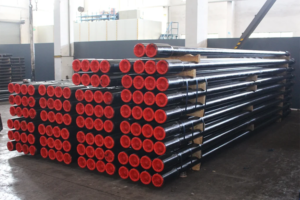
- HDD Drill Pipe S135 1.32″ x #200 for Vermeer D6x6 Navigator
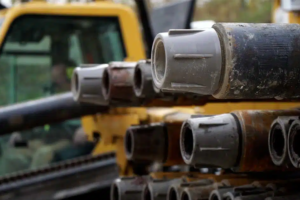
- HDD Drill Rod ID and Flow of Drilling Fluid: The Importance of Inside Diameter
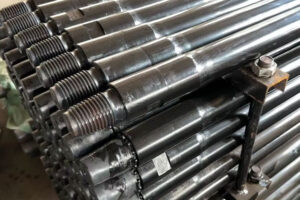
- How to Budget for HDD Drill Rods: Plan Replacements Based on Wear Rates
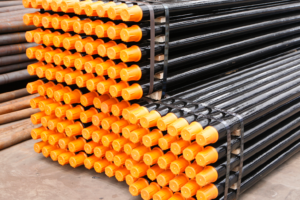
- HDD Drill Rod and Reamer Matching: Preventing Vibration and Uneven Wear
- Developing a Smarter HDD Drill Rod Procurement Strategy: From Line Item to Performance Spec
- Which one lasts longer, one-piece forged drill rod or friction-welded drill rod?