Which Drill Bit Connects to Your HDD Drill Rod? API Reg vs IF Thread Explained
Sure. Let me get a coffee and unpack this fully. Here’s the longer version, with a few little signposts so you can skip around if you want. But actually? Read all of it. I bought this knowledge with broken threads and a bruised pride.
The Day I Got Schooled (With a $700 Bill)
So think about it. I’m in my second month on the job. I’m young, I’m eager and I think I know everything because I watched three YouTube videos about HDD tooling.
A customer’s calling. “Send me a 6 inch bit for my Vermeer drill.” Simple, isn’t it? I pick out a 6 inch bit off the shelf and walk over to the rod box. I find a rod that looks about right. Threads run maybe two turns, then come to a halt.
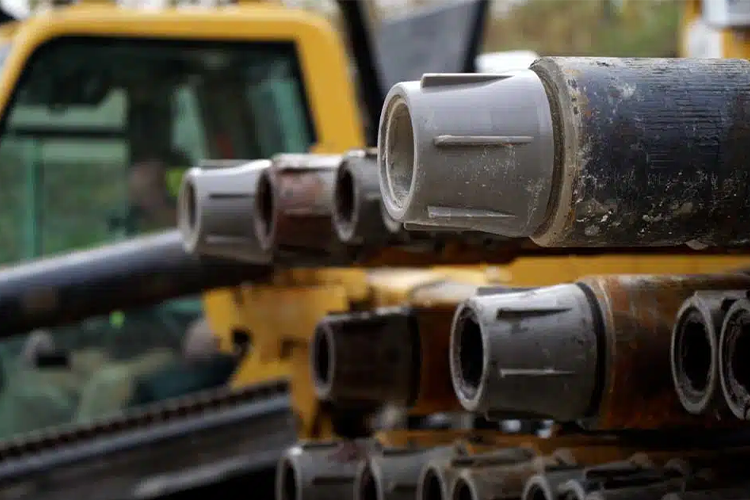
And bright young me, what does he do. I take a pipe wrench. I give it a little muscle. I lean on it.
The thread crests just… peeled away. Like a banana peel. The female thread on the rod was trashed as well. I had to justify to my boss why we were eating the cost of a brand new rod and bit. That was the day he looked at me and said, “You know there’s more than one type of thread, right?”
No. No, I did not.
That’s when I discovered IF and API Regulation. And I’ve never fallen for that again.
API Reg: The Old Reliable (But Chunky)
Let’s start with the grand-daddy of drill thread connections. API Reg (American Petroleum Institute Regular) Been around for ages. You’ll see it on older rigs, smaller directional drills and a lot of utility work – fibre lines under a parking lot, not a river crossing.
How do you tell one? See the threads. They are rough. They’re a bit blocky. The tops of the threads are flat and broad and they are called crests. Almost like a tractor tyre.
The good parts: API Reg is hard. If you get a little dirt on it, it doesn’t complain much. It’s forgivable. The bad stuff: The threads are not as tight so you can get mud bypass under high pressure. Not for large bores or long range shots.
I had a customer once who was running an old Ditch Witch with API Reg connections. He swore by them.” “They don’t bother me,” he said. And he was correct – for shallow residential work they are fine. If it isn’t broke, don’t fix it.
IF Thread – The Smooth Operator
Now IF — Internal Flush — is the new, pretty, high-strung cousin. IF you see it on most modern mid to large HDD rigs. Anything that pushes real mud volume or 500 feet or more.
The IF connection has finer and deeper threads and sharper peaks. Two IF connections screwed together nearly hug each other. The tight fit keeps your drilling fluid inside the rod string and not leaking out into the borehole.
That was the first time I actually looked at an IF thread in a good light and I was like, “Wow, that’s sexy.” My coworker laughed at me. But you know what I mean – it’s built with precision. Like a nice watch next to a sledgehammer.
The catch ? IF threads hate a mess. They hate cross threading. They hate lazy make up. You have to clean them, oil them, and turn them by hand until they stop. And then you give them the final torque. Or? You’ll rub the threads. And galled threads are garbage.
How to Know Which One You Have (Without Tears)
Okay, so you’re on a job site. Your rod box label has long since worn off – mud and sun. How do you know if you need IF or API Reg?
Three Quick Tricks I Learned The Hard Way.
Trick #1: The Eyeball Test. IF threads appear finer and sharper. The API Reg looks a little chunkier. With a known sample next to it, the difference is obvious. But on your own? Stronger.
Trick two: The thread count. Get a tape measure or a calliper if you have one. Count the number of thread peaks per inch. IF usually has 4 to 5 threads per inch depending on size. API Reg has 3-4. That extra thread makes all the difference.
Trick three: The old driller trick I mentioned above. “API Reg looks like it could cut a hot dog,” an old hand told me once. IF appears like it could cut a tomato.” True but weird. IF edges feel more sharp to the finger.
And if nothing works? Take a picture of the female thread inside your rod (shine a light in there) and text it to me. I’ve seen so many thread photos I could pick them out in my sleep. Really. My wife can’t stand it.
One More Horror Story (Because Why Not)
Last year, a customer rang me in a panic. They were three hours into a dull project under a four lane highway. The mud pressure began to fall. They saw no reason why.
It turned out someone in their shop had bought a box of “cheap bits from an auction”. The bits were threaded with IF. Their rods were API Reg. They crowded them together – caught perhaps three or four threads and began to drill.
At low pressure ? Okay. But the mud pump got to 300 gallons and the connection started to leak. Then the threads unloaded a bit. Then the bit was spun off. Within the wellbore. They had to dig an expensive rescue pit to get it out.
That was a 12 grand mistake. All because no one looked at what kind of thread they were starting.
Don’t be that group.
“Wait, Can I Use an Adapter? Quesiton
I get asked this question all the time. “Hey can I just get a sub – a thread adapter – and run IF bits on my API Reg rods?”
Tech-wise? Yes. There are adapters. Should you do it? Only if you have to.
This is why I don’t love adapters. Any connection is a point of potential failure. Every additional joint adds weight and length to your BHA. And on smaller rigs, an adapter can foul your steering because the bit is farther away from the sonde housing.
And adaptors are lost. I can’t tell you how many times I had a customer ask me for “that little thing that goes between the rod and the bit.” The thread sizes they never remember. They don’t have the adapter any more. It’s somewhere in the slop.
So here’s my real advice: Choose one thread standard for your fleet and stick with it. API Reg is fine if you are doing primarily small utility work. If you are river crossing, doing long bores or high pressure then invest in IF rods and bits. Don’t try to be a Swiss Army Knife.
Final Takeaway: Just Ask (And Ask Before You Break Anything)
Look, I know you’re a busy man. You got a crew waiting. You got a hole to finish. You got rain coming tomorrow.” But hang on sixty seconds before ordering your next bite. Check your rod thread . Check with your supplier. Just ask me.
This is what I’ve been doing for five years. I still look at thread specs before I pick up the phone. Because I didn’t even one time? I still cringe thinking about that $700 mistake.
So do me a favour. Next time you are in the shop grab one of your rods and one of your bits. Spin them together nice and smooth – hand, not wrench. If they don’t, find out why, before you’re in a muddy trench with a broken connection and a very angry boss.
And if you ever have any doubts? Phone me. I’ll walk you through it. We’ll laugh at your rusty threads and I’ll get you the right bit. No judgement. I swear.
SHARE:
More Posts for You
- HDD Drill Rods Torque and Pullback Limits: Don’t Go Beyond These Numbers
- Drilling Through Broken Rock? Why Heavy-Wall HDD Drill Rods Are Needed
- The Hidden Cost of Cheap Drill Rods: Why Bargain Prices Lead to Expensive Breakdowns
- A Simple Habit Worth $100,000+: Rotate Your Drill Rods Weekly
- HDD Drill Rod Market Size & Trends 2025-2033: What’s Driving Growth?
- HDD Drill Rods for River Crossings: High Strength Options for Complex Bore Projects
- How I Learned to Quit Guessing and (Mostly) Read an HDD Rod Sizing Chart
- HDD Drill Rod Types & Specifications: The Full Guide