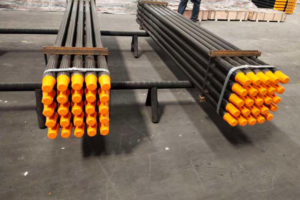
How to Match HDD Drill Rods to Your Job Mix for Maximum ROI
Let me begin with a dirty little secret.
In my first two years selling drill rods, I thought the job was all about price and steel grade. You want 4130? Nice. You want 4140? Also cool. You want the cheapest thing that won’t break on first pullback? I’ll look it up for you.
I was mistaken. Embarrassingly incorrect.
For me, the “aha” moment came on a muddy jobsite just outside Tulsa. I watched a contractor burn through three rod changes in one shift because his rods were technically “perfect” for the bore, but absolutely stupid for the ground he was actually in. His ROI was in the toilet and he kept blaming the drill. The drill was all right. The rods were nice. That was a disaster.
That day I became a job-mix nerd and quit being a price-sheet hawker. So here’s the stuff I wish I knew back in the day, told the way I would tell it over a greasy burger after a long shift.
“But My Rods Work Fine” – Yeah, But Do They Work Hard for Your Cash?
Look, if you are pulling back 200 feet of 4-inch HDPE in sandy loam, any decent rod will do it. But “gets it done” is not the same as “maximises ROI.”
I recall a Florida customer who continued to purchase our mid-tier rods because they were “good enough.” He was replacing two or three rods a month—bent threads, stress cracks, the usual. That was just normal wear and tear, he reckoned.
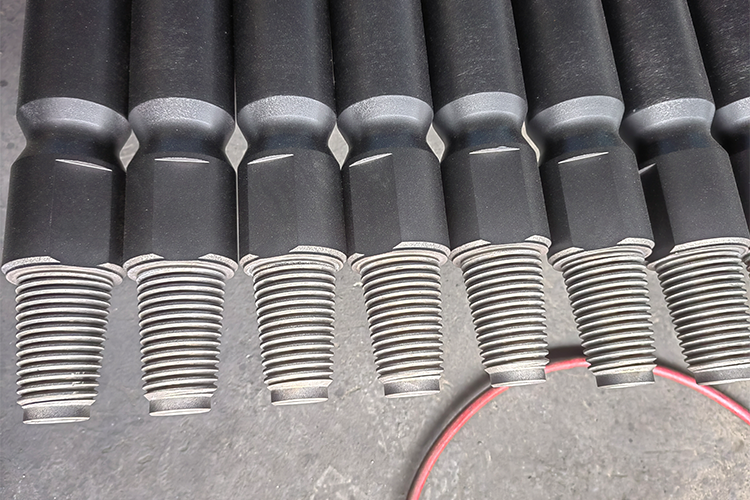
Then we worked out the numbers together. He moved to a rod with a slightly thicker upset (that’s the transition zone near the thread, for the non-geeks) and a different thread profile. Same steel. Same price per foot, nearly. His rod life went from 6 months to nearly 14 months. He wasn’t spending more. He was spending smarter. That’s the ROI game I’m talking about.
The One Question No One Asks (But Everyone Should)
Now, before we talk about specs, here’s what I ask every customer:
“What does the mix of your job look like over the next 90 days—not just today?
“Because if you’re going from 100-foot waterline shots to 800-foot fibre pulls, the rod that sings on that long bore is going to be a liability on the short one. Too hard? You’ll fight it in the angle of attack. Too much flexibility? The long shot will have you lose push power.
I had a guy in Texas, brilliant operator, 20 years in, who had two full sets of rods in his truck. One set for short, rocky jobs . One set for long sandy bores. His crew thought he was nuts. “Why are you carrying that weight?” they asked.
Then he’d finish a 600 foot bore in 4 hours while the other crews were still fighting their “universal” rods at 300 feet. He was not insane. He was only reflecting.
Threads – The Secret (or Not So Secret) Ingredient in Your Job Mix
You know what makes me tick? When people treat threads like they’re all one. They’re not.
Double-start threads are quicker to make up and break out – good if you’re doing 12 connections a day. But if you’re in abrasive ground and you’re constantly torqueing and untorqueing? A coarse single start thread will last longer because it has more meat per engagement.
I learned this the hard way when a customer called me absolutely apoplectic because his “premium” rods were galling after two weeks. And it turns out he was trying to run a double-start thread in a shale formation with a lot of vibration. The threads were dancing against each other like they were in a rave-party. Changed him to a rougher profile – problem solved. He still razzes me about that phone call. Fair enough.
Don’t Fall Into The “Bigger Is Better” Trap
This one just gets me. I see guys buying big, over-sized rods, thinking that means “stronger.” They do sometimes. And sometimes it just means heavier and stiffer and harder on your machine.
Your drill will have a torque rating . Your rods are torque rated. If your rod torque capacity is 30% greater than your drill capacity, you are hauling around dead weight. You’re paying for capacity you will never use—and giving up manoeuvrability in the process.
Match the rod to the machine and the ground, not your ego. I’ve run 2-3/8″ rods on jobs other guys swore you needed 2-7/8″. They were slower, burned more fuel and had more stuck pipe because their rods didn’t bend enough to follow the natural curve of the bore. Sometimes, less is more intelligent.
The Job Mix Spreadsheet That Turned Everything Around
I started this dorky thing with my regular customers about three years ago. I would sit in front of their job logs – not sales logs but job logs – and we would classify each bore by:
Type of ground (sand, rock, clay, mix)
Average duration
Average pullback force
Connections each day
Then we’d colour code which rod spec gave the most life-per-dollar in each category.
One guy discovered that he was using the same rod for 90% of his jobs – but that rod was only “optimal” for about 40% of those jobs. He was spending too much money on half his work and not enough on the other half. He cut his stock in half and his cost per foot went down almost 18% in six months. That’s not a theory. That’s dine-out money.
My Real World Matching Cheat Sheet
I’m not going to give you a textbook chart – you can find those everywhere. But here’s my gut rule of thumb after five years of seeing what really works.
Mixed ground (sand/clay with some gravel): A medium weight rod, single-start standard thread, no need to think about it too much. This is the ‘workhorse’, it doesn’t shine anywhere but it doesn’t suck anywhere either.
Hard rock or cobble: You want a thicker upset and a thread that throws debris well. I like a tapered thread design here – it forces cuttings away from the connection instead of letting them pack in.” Also go one size smaller in diameter than you think you need so you have more flexibility to ride through fractures.
Long straight sandy bores (600+ feet): Straightness and low vibration is important. Here, a rod with a tighter manufacturing tolerance pays for itself – every 0.001” of wobble gets amplified over distance. I’ve seen an 800-foot bore fail because the rod was .003″ off at the pin. That’s not the rod’s fault – that’s the wrong rod for that distance.
Short urban jobs (less than 200 feet, tight entry angles): for me flexibility over ultimate strength. A rod that bends a little without setting will save your back, your machine, and your thread life. Tight angles on stiff rods = thread wear that will make you cry.
The Maintenance Secret No One Tells You
Okay, this isn’t really about matching, but it’s too important to miss.
You can have the perfect rod for your job mix, but still screw it up if you aren’t cleaning your threads properly. I do not mean a quick wipe with a rag, I mean get a brush and chase the threads and look for micro-cracks.
I had one customer who insisted our rods were “junk” because he kept breaking them at the pin. I flew out to his yard, saw his crew make a connection and almost had a heart attack. They were air gunning the threads together with no lube and they hadn’t cleaned the boxes out in a week. The dirt was acting like sandpaper – raw, heat, stress fractures.
We gave them a thread cleaning protocol that added 30 seconds to each connection. They doubled their rod life. They quit blaming me. I cut down on coffee during those site visits.
ROI is Not About Price – It’s About Rhythm
So here’s my last word, and I mean it from the gut:
Your return on investment does not come from buying the cheapest rod or the most expensive one. It’s the buy of the rod that allows you to stay in rhythm.
When your rods match your job mix, you don’t stop to change out bent sections.” You are not fighting the makeup torque. You’re not second-guessing if you can go harder. And you just work. And that rhythm, that flow state, that’s where the money is at.
I’ve seen crews with mid-game rods out-perform crews with top-tier rods, just because the mid-game rods were a better fit for their particular mix. The best rods were technically “better” – but they were wrong for that ground, that drill, that crew’s habits.
So, before you order your next batch, do me a favour: pull up your last 10 jobs. Look at the ground. Look at the length. Look at the problem areas. Then ask yourself, “Is this the rod I always buy, or is it the rod this mix really needs?”
That question is what makes the parts-changer different from the profit-maker. And I’d rather work with the profit-makers any day they’re the ones who call me with good stories, not angry voice-mails.
job mix driving you crazy? Drop me a line or meet me at the trade show. I’ll take the rod samples, you take the job logs. We’ll nerd out together – and maybe save you enough cash to take your crew out for barbeque. That’s a win in my book.
- The One Question No One Asks (But Everyone Should)
- Threads – The Secret (or Not So Secret) Ingredient in Your Job Mix
- Don’t Fall Into The “Bigger Is Better” Trap
- The Job Mix Spreadsheet That Turned Everything Around
- My Real World Matching Cheat Sheet
- The Maintenance Secret No One Tells You
- ROI is Not About Price – It’s About Rhythm
SHARE:
More Posts for You
- Choosing the right drill pipe supplier for your Vermeer D16x20
- HDD Drill Rod Bend Radius Calculator: How to Calculate Safety Limits
- Traceability of HDD Drill Rods: The Case for Heat Lots and Serial Numbers
- API 5DP vs API 7-1: Which Standard Actually Controls Drill Rods for HDD?
- Welding or Repairing a Cracked HDD Drill Rod? The Hard No and Safer Alternatives
- Why Mixing Different HDD Drill Rod Brands on the Same String is a Bad Idea
- HDD Drill Rods for Hard Rock vs Soft Ground One Size Does NOT Fit All
- Best Drill Rods for Large-Diameter Pipe Installation (24″ to 60″ Reaming Passes)