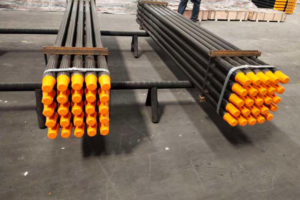
Organizing Your Drill Rod Rack: Simple System to Extend Thread Life
If you’ve been in this mud-slinging game longer than a hot minute, you know the drill (pun intended). We spend all this money on premium drill pipe, we are obsessed with torque specs, we baby the threads during make up… and what do we do? We throw the rod back on the rack and let it bounce around like loose change in a washing machine.
I myself am guilty of it. “My first two years selling this stuff, I’d go out to job sites and I’d see these beautiful, expensive Grade Z rods just piling on each other. The guys would be griping about galling, about pins that wouldn’t stab, about having to use a pipe wrench to bust out joints that should have come apart by hand. And I’d be like ‘Man, that’s a bummer.’
Then one day it dawned on me like a ton of bent subs.
The “Duh” Moment
That day was Tuesday. Tuesday the kind of day when everything goes wrong. We were fighting a bore under a highway and we kept pulling back these rods that looked like they had been thru a war. The threads were not worn out from spinning, they were battered. They had little flat spots, little dings right on the peaks.
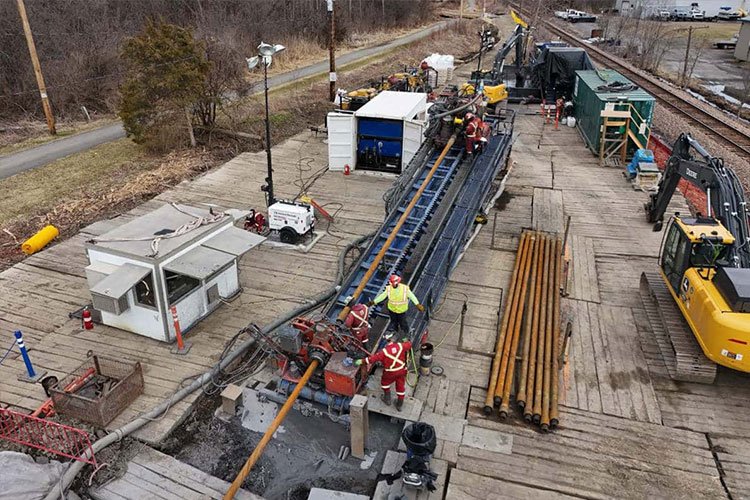
My superintendent, a grizzled old guy named Hank, looked at me and said, “It ain’t the mud, kid. “It’s the drive home.
He gestured toward the rack. There was this big ugly pile of pipe. The excavator operator would grab a new joint and would have to fight it out from under three others. Falling, clattering, slipping. That little ‘clink’ when steel meets steel? That’s a 20-foot hole, your thread life going down.
That was my “Eureka” moment. It wasn’t the drilling. It was the storage.
The “No-Math” System
So I started playing around with a very simple system. I am not an engineer. I don’t do complex. If I have to break out a protractor or a spreadsheet, I’m done.
This is the way I do now and I swear by it.
The Party Favor Rule
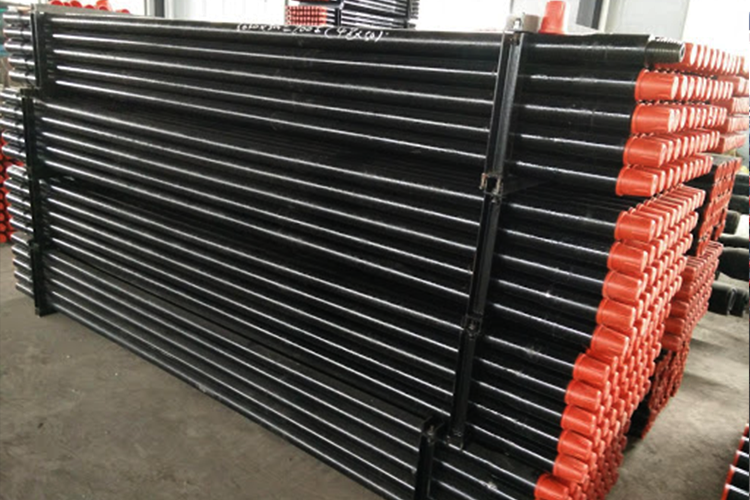
We don’t just put rods on the rack. I use the heavy-duty plastic pipe dividers, the giant hair combs ones. We weld small, simple angle-iron slots onto the rack so that each rod has its own “bed.” Imagine it like a wine rack. You wouldn’t just stack bottles on each other, right? ‘You’d have had glass and a mess. Same with drill pipe. If you have your rod on the threads you’re doing it wrong. The pipe shall be supported by the tube body, not the box or pin.
“Buddy System” (Grade by Grade)
For the love of all that is holy, please don’t mix your G105s with your Z140s. I know it’s tempting if you’re in a rush. “Just take whatever is nearest!”
But here’s the thing. The hardness is not the same. Put a harder rod on a softer rod and the softer rod pays. Always. I actually color code the ends of my racks with some cheap spray paint. Red for the heavy, blue for the standard. Takes ten minutes to do and saves you ten thousand dollars in the long run. When the crew see a color they know where it belongs. It takes out the “thinking” part of the job—and let’s be honest, we’re usually too tired to think by 3 PM anyway.
The Clean Sock Theory
Ever see a thread that looks like it has a little burr of metal just hanging on it? Usually this is dirt that got packed in there while the rod was lying on the ground or resting on a muddy rack. My rule? The rack needs to be so clean you’d want to put your lunch down on it. I’m not saying you have to eat off of it, but keep the dirt and gravel out.
I have a little air hose on the rack. We blow off the connection before we put a rod down. Not the crazy high pressure, just blasts sand into your shins, just a gentle puff to get the big chunks off. And then we put the thread protectors back on. I know, I know. Thread protectors are a pain in the ass. And they get lost. They get dirty. But better to lose a $20 plastic cap than a $1200 piece of pipe because the shoulder got niced.
The ‘Broke’ Test
And this is how I know it works. We had a customer, a big outfit out of Oklahoma, burning thru pipe. They bought new rods every couple of months. I went out there and set up this very system (the color coded slots, the plastic combs, the whole nine yards). Nothing fancy. No fancy auto racks. Simply organization.
6 months later I get a call. I am preparing to file a complaint.
Instead, the guy says, “I just mic’d my threads. They are still within spec. I haven’t purchased a new stick in almost a year.
That’s the problem.” You don’t need to be a genius to make your threads last longer. You just have to be a bit of a neat freak. “Stop using your pipe rack as a trash can. Think of it as a toolbox.
Because when you are 500 feet in the ground and you can’t make a connection because the pin is mashed up, you won’t be cursing the dirt. You’re gonna be cussing the guy that put that rod on the rack last nite. And most of the time, that guy is you.
So do future you a favor. Check your rack tomorrow morning. Is it a muddle? If it is, you know who to thank And you know just how to fix it.
SHARE:
More Posts for You
- Choosing the right drill pipe supplier for your Vermeer D16x20
- HDD Drill Rod Bend Radius Calculator: How to Calculate Safety Limits
- Traceability of HDD Drill Rods: The Case for Heat Lots and Serial Numbers
- API 5DP vs API 7-1: Which Standard Actually Controls Drill Rods for HDD?
- Welding or Repairing a Cracked HDD Drill Rod? The Hard No and Safer Alternatives
- Why Mixing Different HDD Drill Rod Brands on the Same String is a Bad Idea
- HDD Drill Rods for Hard Rock vs Soft Ground One Size Does NOT Fit All
- Best Drill Rods for Large-Diameter Pipe Installation (24″ to 60″ Reaming Passes)