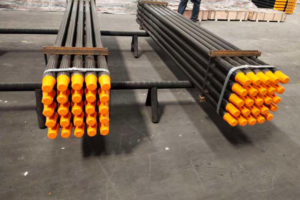
Steering Angle vs. Drill Rod Bend Radius: What’s the Safe Maximum?
Steering Angle vs. Drill Rod Bend Radius: What is the Maximum Safe Amount?
You know that feeling when you’re on a job, sun beating down, mud flying, and your bore path decides it wants to play ball? Me too yeah. I’ve been on more drill sites than I can count and one question comes up more often than a bad case of clay balls in the mixing tank – ‘How far can I really push this steering angle before I snap something?
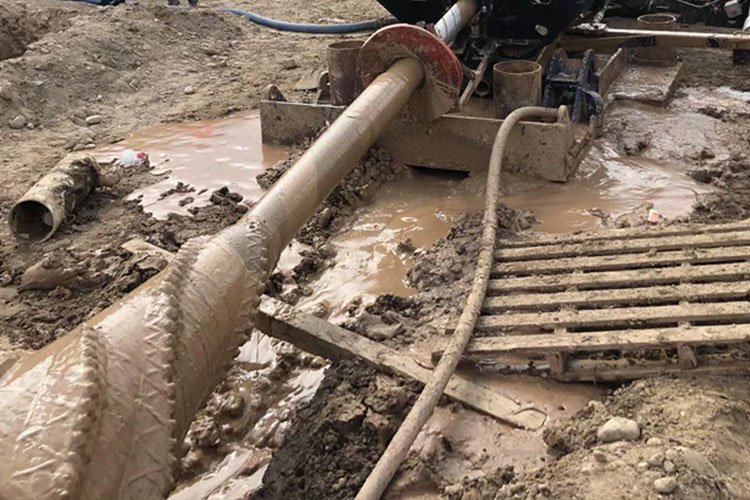
I’d always give the textbook answer. “Well, the manufacturer recommends…” and I’d see their eyes glaze over faster than you can say, “pullback”. So let’s not have a lecture today. So let’s talk about the relationship between steering angle and drill rod bend radius like we’re standing around the rig with a cup of questionable coffee.
The Setup: What We’re Really Talking About
Steering angle is how much you tell that downhole tool to turn. Bend radius is the amount of curve your drill pipe can take before it says “nope” and dies. They’re two sides of the same coin, but here’s the kicker: a lot of guys act like they’re the same thing. No, they are not.
I remember my first year on the road, fresh-faced, thinking I’d got it all figured out. I was on a job in some rocky glacial till and the engineer had ordered a steering angle of 5 degrees. No big deal right? The textbook says our rods will take 8 degrees so I have a 3 degree safety margin. Lots of room to breathe.
Except the rods didn’t agree. By the time the second push was over we were pulling out rods that looked like bananas. Not literally but it was a bend that made me wince. That was my ‘ah-ha’ moment, the moment I realised the steering angle number on the screen means diddly-squat if you don’t know the bend radius of the pipe you are actually using.
The Plot Twist: It’s Not Just About the Number
And here is the dirty little secret: that steering angle reading? It’s an average This is the software’s best estimate based on the tool’s geometry, but it does not take into account the fact that your drill rod is a flexible piece of steel, not a rigid arrow. But bend steel past its happy place and it fatigues, not just bends. It begins to develop microcracks. And those micro-cracks are the gremlins that make a routine shot a “why is my mud pressure spiking?” nightmare.
So what is the “safe maximum”? Quite frankly? That’s debatable.
I do know, I do know. That’s the answer for sales guys. But listen to me.
The absolute physical minimum bend radius for a typical S-135 rod with a 3.5” OD is usually somewhere between 80 and 100 feet. That’s the point where the steel starts to yield permanently . But do you want to live your life to the fullest limit? It’s like driving your truck with the gas light on, you may make it to the gas station or you may be walking.
The “Slow and Low” Rule That Works
Look, I pulled enough broken rods out of the hole to know that the safe maximum steering angle isn’t a number, it’s a feeling, a calculation based on the ground your in and the steel you’re pushing.
This is what I tell the crews who call me up in a panic:
If you’re on soft forgiving ground like clay or sand you can lean on your steering angle a little harder. The rod dips, but it is a soft, sweeping dip. The earth gives a little so the pipe doesn’t have to do all the heavy lifting.
But the second you hit hard rock, cobble or that horrible compacted fill they love to put under city streets? Turn that steering wheel back. I’m talking 3 degrees. 4 if you’re feeling lucky, maybe. Why? Because the tool doesn’t bend in hard ground—it bends the pipe. And that bend is right there at the connection. That’s where most failures happen, right behind the box end, where the steel has already been stressed by the threads.
My “Stupid” Rule of Thumb
So after that humiliating banana-rod job early in my career I developed what I now call the “One-Third” rule. I don’t give a shit what the spec sheet says your rod can handle. Take that maximum physical bend radius and only use the top third as your “safe” operating zone.
What if your rod breaks physically at an 8-degree angle in soft ground? My brain says 5 degrees is my cut-off point. Because at 5 degrees I know I’m not asking the steel to do anything unnatural. I am saving the tiredness for the unexpected, like that boulder the locator didn’t see, or that sudden drop in pressure that changes your steering response.
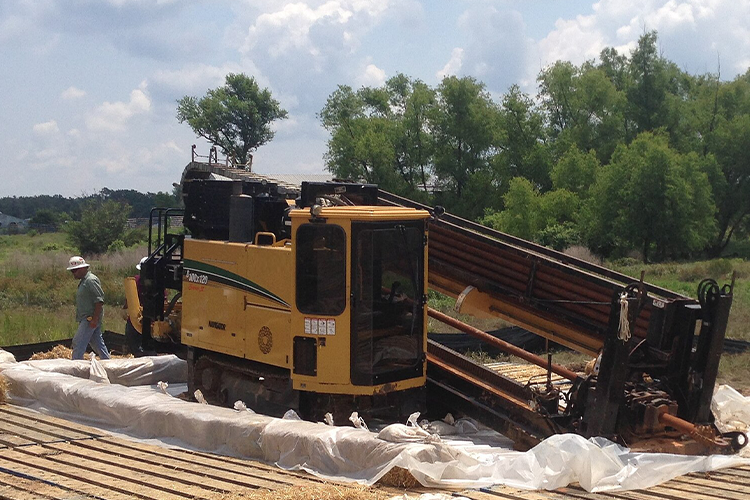
The Feel Factor
The best drillers I know don’t even look at the screen. They can feel it. They feel the shove. They can feel the torque.
If you’re pushing and the rod is fighting you, that jerky, grindy feel, you’re beyond the safe bend radius for the conditions. At this point the steering angle number on the screen is only a suggestion. The real number is the one you feel in the head of the drill
The Bottom Line (Because We All Want One)
If you ring me and ask me for a number I’ll ask you “What’s the ground like?”Then I’m going to tell you to be a yellow coward. Be dull. Be the guy who takes three extra shots to make a gradual turn instead of one sharp ugly “hold-my-beer-and-watch-this” turn.
The safe maximum is not a fast ride there. It’s about getting there without having to stop for a fishing trip.
Bend gently, flow the mud, listen closely. The rod will tell you when you push too hard you just have to be willing to listen before it screams.
Now go get em. And for Pete’s sake don’t try to set a new world record for deflection in that rocky part we mentioned.
SHARE:
More Posts for You
- Choosing the right drill pipe supplier for your Vermeer D16x20
- HDD Drill Rod Bend Radius Calculator: How to Calculate Safety Limits
- Traceability of HDD Drill Rods: The Case for Heat Lots and Serial Numbers
- API 5DP vs API 7-1: Which Standard Actually Controls Drill Rods for HDD?
- Welding or Repairing a Cracked HDD Drill Rod? The Hard No and Safer Alternatives
- Why Mixing Different HDD Drill Rod Brands on the Same String is a Bad Idea
- HDD Drill Rods for Hard Rock vs Soft Ground One Size Does NOT Fit All
- Best Drill Rods for Large-Diameter Pipe Installation (24″ to 60″ Reaming Passes)