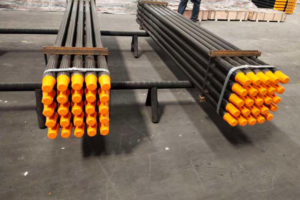
HDD Drill Rod Thread Compound 101: Selecting The Right Anti-Seize Lubricant
Here’s something for you to be embarrassed about.
In my second year in this business, I sold the wrong thread compound and cost a good customer a whole day’s down time. Not a bad product but the wrong one. Drilling in July heat, in Oklahoma clay, in that fancy copper-based goo I recommended? It turned to glue. His tool joints are screaming by noon and I am on the phone with him, sweating through my shirt, trying to sound like I know what I’m talking about.
Spoiler: I did not. Not really.
It bruised my pride that day, but I learned more from a product manual than I ever did. So today I want to sit down (metaphorically, I’m pacing around my shop as I dictate this) and tell you what I’ve learned the hard way about picking the right anti-seize for your HDD rods. No sales talk. Just things I wish someone told me when I thought, “All pipe dope is pretty much the same.”
The Day I Learned My Lesson
That gig in Oklahoma? The driller was running a 100,000-lb pullback machine, 6-inch rods and driving through that sticky red clay that heats up threads like a friction oven. He needed a compound to withstand extreme pressure and high heat without breaking down. I gave him our standard nickel grade stuff, good for average conditions, cheap, does the job 80% of the time.
But that wasn’t the 80% that day.
He rings me by 2 p.m. Threads are seizing up. We’ve taken out two pins.” I took out a box of our heavy-duty copper-plus compound, the one with the higher solid lubricant content. He put it back on and within an hour the torque was down, the squealing on the joints had stopped and he looked at me like, “Why didn’t you give me this in the first place?”
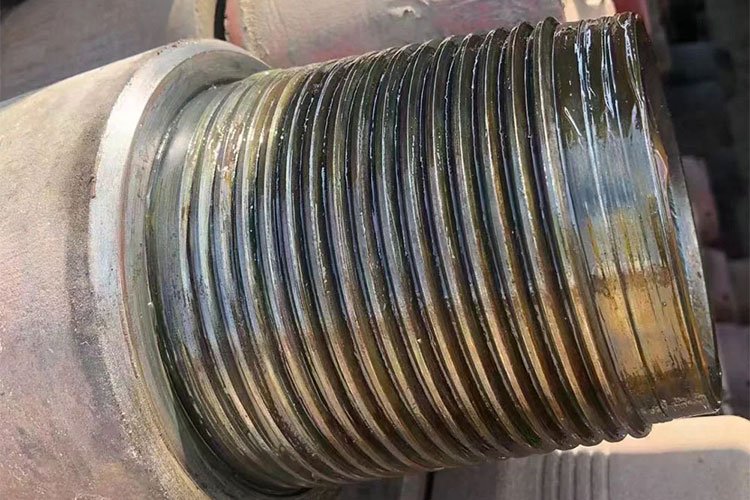
Good question. The answer was ? I was young and I was reading the spec sheet, not reading the job.
So here’s the straight talk: thread compound selection is not about the “best”. It’s a matter of selecting the right one for your ground, your rig, your mood that day.
What’s Really in That Little Bucket? (And Why You Should Give A Damn)
Most guys don’t give a shit about chemistry. Okay. You want to cover it, make up the joint, get back to steering. But here’s the secret: anti-seize is basically a carrier grease loaded with particles of solid lubricant like zinc, copper, graphite or molybdenum disulfide. Those solids are the true heroes. They she under pressure, make a slick film between the pin and box, and keep the metal from welding itself together when you torque it up.
The carrier grease is just to hold everything in place until you assemble the joint. Then it squeezes out or burns off and the solids do the heavy lifting.”
So when you look at a shelf full of buckets, you’re really making a choice among those solids.” And they all have personalities.
Zinc based: Good all rounder. Cheap, moderate temperatures, works for most shallow bores. Think of it as your ‘ride.
Copper-based: Good heat tolerance. Uses more torque My favorite when I run into sandstone or any abrasive formation that’s going to make friction
Graphite or Moly. Smooth as a whistle. Good for very high pressures, but it can be messy and sometimes reacts with some pipe steels. I’d only recommend these if you are in deep hard rock or really pushing your machine to the limit.
Once a veteran driller in Texas told me, “Son, I just use whatever’s on sale.” And I laughed, then I saw his rod box, pitted threads, stretched pins, the whole shebang. He was laying away fifty bucks a month on compound, and blowing thousands on rod repairs. Don’t be that person.
The Hot Trap
This is where I see most dudes fail. They think “anti-seize” means it works in all weather. Nope.
In December I took a job in North Dakota. Ground frozen solid, air temp ~-10F. The crew was using a normal petroleum-based compound, but it was so thick that they couldn’t even pump it out of the bucket. They’d heat it with a propane torch and, by the way, that’s a bad idea, you can flash off the carrier and ruin the lubricant. And threads were galling on the right and left.
I changed them to a synthetic based compound with a lower pour point.” Day and nite. It ran well even in that bitter cold and the torque stayed steady all shift.
On the flip side I’ve seen guys put that same synthetic in an Arizona summer and it got so thin it dripped off the threads before they even stabbed the joint. Worthless.
So Rule #1: Don’t use the “ideal” numbers in the brochure — match your compound’s temperature range to your site conditions. Ask yourself: Is this a sweat-through-your-overalls job, or a wear-two-pairs-of-socks job? That’ll get you going the right way 80% of the time.
Torque Talk – Don’t Ignore Your Make-Up Pressure
This one still gets me. I’ll have a customer call me and say, “My joints keep backing out.” Nine times out of ten they’re not using enough make up torque, or they’re using a compound that’s too slippery and the friction factor is wrong.
Different compounds have different coefficients of friction, you understand. A high slip moly paste may let you bottom out the shoulder at a lower torque, but that also means it can loosen up under vibration. The heavier the copper paste, the more resistance you’ll have, so you’ll need more torque to get the shoulder seated properly, but once it’s seated, it stays seated.
I remember one job over by Pittsburgh, shale, tons of vibrations. The driller had to re-torque all the time every 50 feet. We changed from a graphite blend to a medium-zinc with a little more “grip” and all of a sudden his joints were holding tight the whole way through the bore. He looked at me like I was some wizard. I am not. Oh, I just remembered how much slick compounds like vibration, about as much as I like a flat tire on a Friday afternoon.
So here’s my rule of thumb, if you are running high torque ( over 30,000 ft-lbs) go with copper or moly. If you’re in the moderate range, zinc is your pal. And always—always—check your thread manufacturer’s torque recommendation. Then do minor tweaks according to the spec of the compound. “Stop guessing. It costs money to guess.
Thread Type Is More Important Than You Think
That sounds obvious, but you’d be surprised how many people neglect it.
I had a guy using a compound for tapered threads on his flush-joint rods. Different thread form, different clearance, different stress points. He kept getting “dry” joints, where the compound squirted out and left bare metal. He blamed the stick I blamed the pail.
“When we switched to a compound with a finer particle size that could stay in those tight clearances, the problem went away.”
So do me a favor, check out your thread design. Coarse, tapered threads (like API) can take heavier, chunkier compounds. Finer threads or flush joints require a smaller, smoother solid that won’t get wedged and create false torque readings.
And if you’re running coated rods, like with a phosphate or zinc-nickel finish, be careful. Some compounds with aggressive solids can actually strip that coating off faster. I saw it. Then you’re exposing bare steel to corrosion, and that’s a whole other headache.
The “Field Test” I Swear By
Let’s forget the lab data for a second. This is what I do when I don’t know.
I take a little of the compound and crush it between my thumb and forefinger. Gritty feeling? Good. Means it’s got good particles. But if it feels too gritty, like wet sand, it may be too coarse for your tight clearances.
Then I put a dab on a scrap piece of pipe, make up a joint hand tight, and break it back apart. Look at the coverage. Is it even? Does it bead up or smear? If it’s patchy, that compound isn’t wetting out properly and you’ll get dry spots under load.
I can’t remember how many times this little ritual has saved me. It’s not science, but neither is the occasional drilling. You gotta trust your hands like your head.
Storage and Shelf Life- Dull but Necessary
Anyway I will cut it short because I know you didn’t come here for a lecture. But I’ve seen brand new buckets of compound go bad if they sat in a hot trailer all summer or froze in a truck bed all winter. The carrier grease separates out and the solids settle into a brick at the bottom. You end up with runny oil on top and clay on the bottom.
Mix well each time before use. If it smells funny or looks like cottage cheese, throw it out. And store it somewhere where it doesn’t have huge temperature swings, under the rig, in the shade, whatever. Your future self will thank you.
My Personal Shortlist (for various scenarios)
So, so that you have something practical to walk away with:
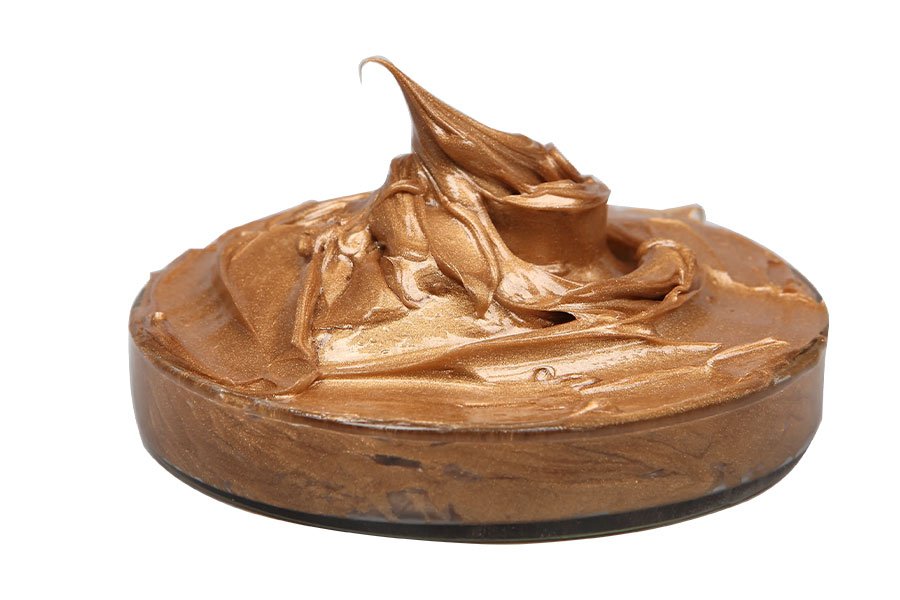
Medium viscosity, zinc-based, mild conditions, general everyday use. Reliable non messy cheap.
Hot weather, deep bores, high torque: Copper heavy blend. “You can manage the heat, stay in place, have that confidence when you’re pulling back hard.
Cold weather Synthetic carrier with fine solids Arctic or winter jobs. Stays fluid, easy to apply, doesn’t turn to glue.
Problematic formations (sandstone, fractured rock): Moly or graphite for extreme pressure. Just be ready to clean up, it’s messy.
And what if you’re still stuck? Ring me. Yeah, right. I would rather talk to you on the phone for ten minutes than hear later that you broke a rod due to a compound mismatch. I’ve been there, it’s not fun for either of us.
One Last Story Why Not
About three years ago I got a call from a customer in West Virginia. He was running a brand new set of 5″ rods and his threads were galling after only 200 feet. He was angry. Thought the rods were bad. I went out and looked at his compound bucket and I could see immediately what the problem was.
It was a copper paste, with a high temperature rating. Great stuff. But he was drilling in wet, soft clay with little load on the threads. It was too much, the compound, and it was so thick it wasn’t going to go into the thread roots. It was simply sitting on the crests, doing nothing.
I handed him a lighter zinc blend out of my truck. He looked at me as if I were crazy. “This crap?
“Try it,” I said.
He did. No chafing. No heat (8) Clean up to 800 ft. The next week he called me and said, “I owe you a steak.
And that’s the thing about this business, it’s not about the most expensive product. It’s about the right product for that machine, that hole, that day.
So next time you’re reaching for a bucket of compound, don’t just pick up the nearest one. Think about the ground, weather, torque and your thread type. And if you’re not sure, do what I do. Call somebody who’s already made the mistakes so you don’t have to.
Now go out and drill something. And for God’s sake, wipe your threads before you put the compound on. But that’s a rant for another day.
SHARE:
More Posts for You
- Choosing the right drill pipe supplier for your Vermeer D16x20
- HDD Drill Rod Bend Radius Calculator: How to Calculate Safety Limits
- Traceability of HDD Drill Rods: The Case for Heat Lots and Serial Numbers
- API 5DP vs API 7-1: Which Standard Actually Controls Drill Rods for HDD?
- Welding or Repairing a Cracked HDD Drill Rod? The Hard No and Safer Alternatives
- Why Mixing Different HDD Drill Rod Brands on the Same String is a Bad Idea
- HDD Drill Rods for Hard Rock vs Soft Ground One Size Does NOT Fit All
- Best Drill Rods for Large-Diameter Pipe Installation (24″ to 60″ Reaming Passes)