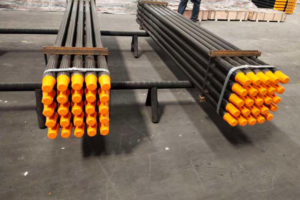
Treat HDD Drill Rod Like a Purchasing Strategy, Not a Line Item
Take a seat. Or you know, whatever equipment you’re currently hiding behind while scrolling on your phone. I don’t mean to judge. I have been in this non-stop trenchless world for 5 years and one thing I’ve learned is that we all need a minute to breathe.
Today I want to rant about something that has been bothering me. It’s something I see every day when I’m talking to customers.
That’s how we buy drill rod
Most guys treat it like buying paper for printers. Or the toilet paper. It’s a “line item.” It’s that thing you have to order because the guys are standing around waiting for the rig to spin, and the last set got stuck in a rock seam 200 feet down.
Understood. I mean it, really. When you’re busy you just want the metal sticks to show up so you can continue to make money. You look at the price You look at the box And you move on.
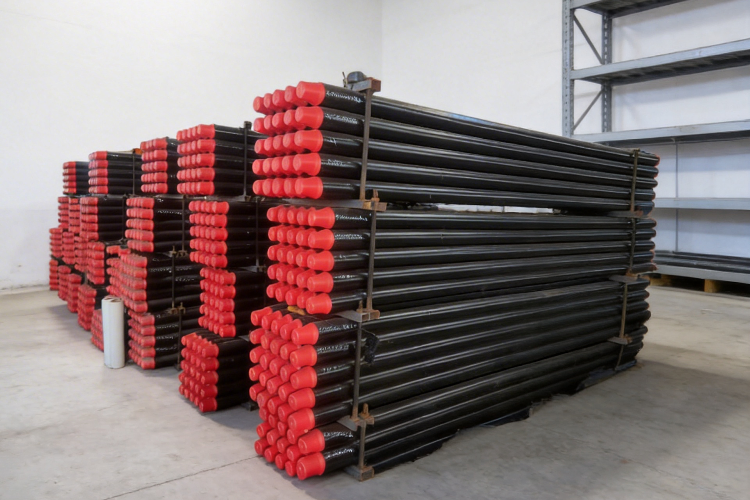
But that’s the thing. I had a moment about 3 years ago that completely changed the way I see this business. And I want to give you that “aha” moment because it could save your back—and your wallet.
The Day I Stopped Treating HDD Drill Rods Like Toilet Paper
I was in West Texas on a job site. Damn hot. Dusted everywhere. I was just checking in with a crew that we’d sold to a few times. Rick, a grizzled guy who was the foreman, was in a mood.
He was looking at a pile of bent rods as if they had personally insulted his mother. “”Look at this junk,” he snapped, kicking a bit of pipe. Third set this month. “The threads are shot. The walls are thinning out. My guys spend more time changing bits than they do drilling.”
I started to give him my usual spiel about torque ratings, tensile strength. The stuff in the brochure, you know. He cut me off. “Forget it, kid. I don’t care about the specs. I love the day. These rods have cost me a day. “The rig was down for four hours fishing a broken piece out of the hole.”
That’s when it struck me. He wasn’t mad about the price He was crazy about the time.
“We put thousands of dollars into the rig, into the mud system, into the tracking gear. We pamper those machines. We do the oil changes, we warm them up in the winter. But the drill-rod? The thing that does the work, takes the abuse and connects you to the drill bit a mile away? We treat it like it’s disposable.
And yes, it is technically. It’s getting old.
But this is the hard truth I learned standing in that dusty field: The cheapest rod is rarely the cheapest rod.
The “Bargain” That Cost Me $10,000
Let me tell you about a screw-up I had. When I was new in sales a guy came in and asked for the cheapest 2-3/8″ rod I could get. I said to him, ‘Look, there’s a difference. These heavy-duty rods are more expensive, for the quality of steel and the heat treatment.”
He didn’t give a shit. “Give me the cheap stuff. It’s just a water-pipe. The distance is near.”
So I did.
Two weeks later, I got a call. That ‘short water line’ ran into a patch of chert rock that wasn’t on the survey. The cheap bars? They turned into pretzels. Two rods down the hole. We had to bring a second rig in for a wash-over operation just to save the string. It was no longer a “budget” project. All of that was a mess.
I was sick. Not because I lost the sale on the next job (rightly he was mad), but because I knew I had not done my job. I wasn’t selling him a line item. I was selling him hookups between his machine and the profits at the end of the hole.
Why the Threads Mean More Than the Price Tag
I am not going to lecture you about metallurgy. That’s boring and quite frankly I sometimes fall asleep reading the heat treat charts.
But I do want you to think about threads for a second.
See those little grooves on the end of the rod? That’s the hand-shake. This is where all the power from your rig, the push and pull and rotational torque, gets transferred.
If the threads are not made to precision, or if the steel is soft, the connection breaks. It doesn’t usually snap catastrophically. Typically it’s micro-movements. And you’re a bother. The threads “catch” and grip.
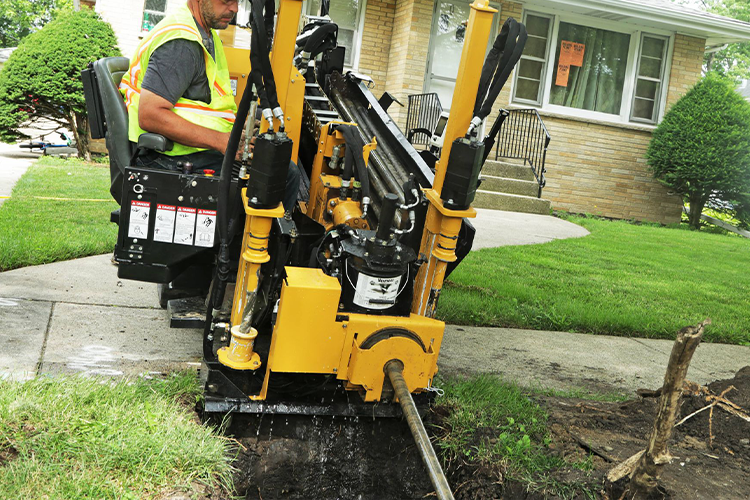
Now the connection is a solid piece of metal. You can’t split it on the rig floor. You are the proud owner of a 30-foot long, very expensive, piece of scrap metal that requires a torch to get apart.
That’s not a drill rod thing. That’s a time management issue. That’s a work problem.
So, How Do We Change Our Thinking About It?
Okay, enough whining. Strategy, let’s talk.
If you look at it as a buying strategy, it changes the conversation all of a sudden. You stop asking “How much per foot?” and start asking “What’s the total cost to get to the other side?”
- Know your Ground (Literally):
Are you in the mud? Sand ? Rock? Hard rock?
Don’t buy whatever is in stock. Align the rod with the ground. In a rocky area you need a rod that has a smaller outside diameter and a thicker wall. If you ‘re in sand , you might want a harder surface to resist abrasion .
You wouldn’t go to a mud bog with street tyres. Flexy rods to a rock hole?
- Rotate. It’s Your Friend.
One of the biggest mistakes I see guys make is to run rods that are out of balance. If you have a certain torque range for your machine, you need rods that can handle the working torque, not just the break out torque.
If your rod is too stiff the vibration is transmitted to your machine. If it is too loose it flops around and wears the threads faster.
- The Maintenance Myth;
Look, I know we’re all tired at the end of the day. I know you want to put the rods down and go home.
It’s not “being picky” to wash the threads and wipe them down with some compound. It’s a tax on “you”. You are paying yourself 5 minutes of effort today to save yourself 3 hours of frustration next week.
I had this one customer, a guy named Dave, he was crazy about his rods. He’d look at each one as it came back to the rack. He looked for marks of wear, he checked the threads for rust. We all cracked on him. “Oh, here comes Dave the Drill Rod Nerd.”
But here’s the thing. Dave was never flustered. Always. His rods lasted almost twice as long as any of the others. His inventory was an arsenal of weapons, not to be consumed. And guess what? He was usually home for his tea while the other crews were still out trawling for broken bits in the dark.
The Plan Vs Budget
That’s not to say you need to buy the most expensive rod on the market. I’m telling you to be smart.
If the supplier can’t tell you what the steel grade is or doesn’t know the hardness value, run. If the price is too good to be true, it is. That “cheap” rod will cost you 2 days of rig-up, a week of downtime and the earful you will get from the general contractor.
I want you to take this into account when you are placing your next order.
Don’t just see the drill rod as another line item on the spreadsheet that you have to purchase. Think of it as your insurance policy.
It’s the “arm” that reaches into the darkness.
It’s the thing that takes the beating so your $500,000 rig doesn’t.
It is the difference between a smooth pull-back and a belly-up job that loses you money.
The Bottom Line (From Your Inbox to My Heart)
We’re in the same boat. I understand the pressure. I know the time limits. I know the terrain.
I don’t want you to think of me as the guy who just “sells pipes”. I want to be the guy that helps you make your money.
If you ever write a job description again, give me a call. We can discuss the soil report. Now, tell me about your machine. We can talk over the habits of your crew.
Let’s think of it as a strategy. Because, between you and me, we both know that “line item” is the only piece of equipment that does the job.
Okay, now I’ll get off my soapbox. Go check your threads and make sure your crews are washing them down. You’ll thank me later.
SHARE:
More Posts for You
- Choosing the right drill pipe supplier for your Vermeer D16x20
- HDD Drill Rod Bend Radius Calculator: How to Calculate Safety Limits
- Traceability of HDD Drill Rods: The Case for Heat Lots and Serial Numbers
- API 5DP vs API 7-1: Which Standard Actually Controls Drill Rods for HDD?
- Welding or Repairing a Cracked HDD Drill Rod? The Hard No and Safer Alternatives
- Why Mixing Different HDD Drill Rod Brands on the Same String is a Bad Idea
- HDD Drill Rods for Hard Rock vs Soft Ground One Size Does NOT Fit All
- Best Drill Rods for Large-Diameter Pipe Installation (24″ to 60″ Reaming Passes)