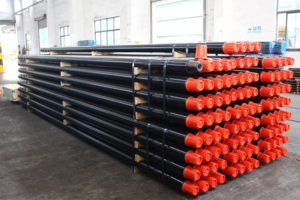
Friction Welding VS Inertia Welding on HDD Drill Rods What’s the Difference?
Let me begin with a confession. When I first entered this industry 5 years ago, I thought “friction welding” and “inertia welding” were basically the same thing. Like, tomato, tamato, right? I remember sitting in a meeting with a customer and the customer asked which one we used on our drill rods and I gave this super confident answer that was… well, let’s just say it was 50% right. The customer gave me that look – you know the one – and I knew I had some homework to do.
That was my oh crap moment. And that’s exactly why I want to take you through this today, so you don’t have to learn the hard way like I did.
The Short Version (For The Busy People)
Both processes are solid-state welding techniques, which means they weld metal together without actually melting it. If there is no melting there is no re-cast metal, no grain enlargement and the weld is cleaner and stronger. But the way they arrive there. Totally different.
The “Aha! Moment: How They Really Work
And here is where it gets interesting.
Inertia Welding is like a flywheel storing energy and then releasing it all at once. Imagine that you have a big spinning flywheel that stores kinetic energy. You disconnect the motor, you put the parts together and that stored energy does all the work. The flywheel always decelerates until it stops – no brake. It’s one and done. The speed and weight of that flywheel determine all the energy for the weld ahead of time.
Friction Welding (aka what the industry often refers to as “continuous drive” or “direct drive” friction welding) is more like keeping your foot on the gas pedal. The motor is always running. You control the speed, the pressure and the timing in real time. The motor keeps spinning the part at a constant speed until you decide to apply the brake and forging pressure.
What Does This Mean For Your Drill Rods?
Here’s where the rubber hits the road — literally.
The traditional method is inertia welding, particularly here in North America. It’s been the standard for HDD drill pipe for years because it delivers a lot of energy in a very short time – we’re talking about 18-20 seconds for a single weld, versus 30-50 seconds for traditional friction welding. That speed means a smaller heat affected zone, which means less chance of messing up the microstructure of the steel.
But here’s the thing, direct drive friction welding gives you a lot more control. The process can be monitored and adjusted 1000 times per second. That’s a lot to deal with when you’re working with high-strength steels that need precise heat treatment.
“Wait, What?” Moment I Had
One of the biggest misconceptions I had, and I see a lot of customers make the same mistake, is thinking that inertia welding and friction welding are interchangeable terms. They’re not. Inertia welding is a form of friction welding but not all friction welding is inertia welding.
All inertia welding is friction welding but not all friction welding is inertia welding, so think of it like this: It’s like saying all rectangles are squares but not all squares are rectangles. Once that clicked for me, everything else fell into place.
Which one to choose?
Honestly, Both methods will give you a strong and reliable weld if done correctly. Inertia welded pipe is 100% weld penetration and the weld faces are not exposed to the atmosphere during the process. That’s a big deal for preventing contamination.”
Direct drive friction welding, however, provides that modern precision control which can sometimes eliminate the need for a full post-weld heat treatment.
In our factory we have much experience with both processes. And the fact is, the best choice depends on your particular application, your steel grade and what you’re trying to achieve.
My Learnings After 5 Years
What I really wish somebody would have told me on day one is don’t get hung up on which process is “better.” Both are solid state welding processes, no melting, no filler material, just pure metal-to-metal welding. The real question is what works best for your operation.
Inertia welding is quick and easy, with fewer variables to control. Direct drive puts precision and control in your hands. Both will do the job if the people running the gear know what they’re doing.
And, if you ever find yourself in a meeting and someone asks which one do we use, just remember – it’s not about taking sides. It is a question of choosing the right tool for the job.
Have questions? Send me a text. I’ve been where you are and I’m always happy to talk about this stuff. Lord knows I’ve had enough embarrassing moments in meetings to last a lifetime – might as well put that experience to good use.
SHARE:
More Posts for You
- Traceability of HDD Drill Rods: The Case for Heat Lots and Serial Numbers
- API 5DP vs API 7-1: Which Standard Actually Controls Drill Rods for HDD?
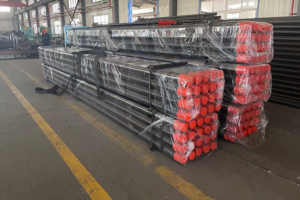
- Welding or Repairing a Cracked HDD Drill Rod? The Hard No and Safer Alternatives
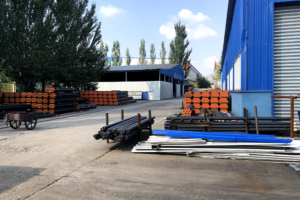
- Why Mixing Different HDD Drill Rod Brands on the Same String is a Bad Idea
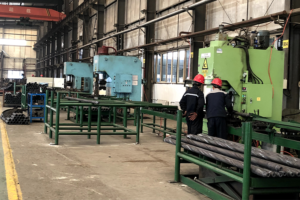
- HDD Drill Rods for Hard Rock vs Soft Ground One Size Does NOT Fit All
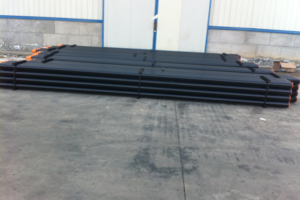
- Best Drill Rods for Large-Diameter Pipe Installation (24″ to 60″ Reaming Passes)
- Friction Welding VS Inertia Welding on HDD Drill Rods What’s the Difference?
- Box vs. Pin End: Which Side of the HDD Drill Rod Fails First?